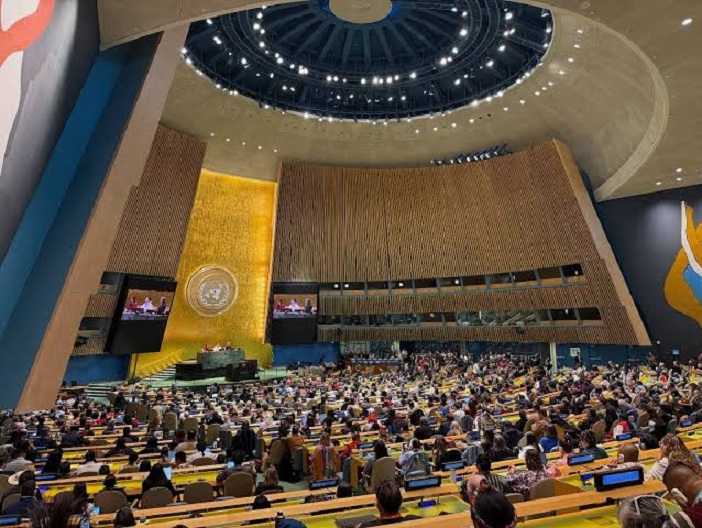
NEW YORK (United States): United Nations Secretary-General António Guterres has said the rights and well-being of the Indigenous people must get more attention globally, especially in their role as guardian of nature, and called for integrating their voice into policies on environment and health.
Inaugurating the 25th session of the United Nations Permanent Forum on Indigenous Issues (UNPFII) here earlier this week, Guterres highlighted the challenges faced by Indigenous communities worldwide, linking their struggles to the global crises of climate change, biodiversity loss and health inequities. “Indigenous peoples are the first to feel the effects of environmental destruction, yet they are often the last to have a say in the decisions that affect their lands and cultures,” Guterres said, urging governments and the UN to prioritize their inclusion in decision-making.
Guterres described Indigenous peoples as “guardians of nature”, noting that their traditional knowledge of sustainable land management and biodiversity preservation was extraordinary. He praised their role in protecting ecosystems, which he argued is critical to global climate resilience. “In many parts of the world, Indigenous peoples are the first line of defense against the degradation of our environment,” he said.
Asserting that the Indigenous peoples are facing a health crisis, Guterres said loss of land, forced displacement and environmental contamination were the major causes of this crisis. “Health cannot be separated from land,” he said. He highlighted the need for health systems to be culturally appropriate and for national policies to integrate traditional Indigenous knowledge into healthcare frameworks, particularly in the areas of mental health and holistic healing.
“We cannot perpetuate the same injustices that have already caused harm to Indigenous communities,” he said, echoing concerns about land grab under the guise of conservation, and the displacement of Indigenous peoples for carbon offset schemes and protected areas.
The Secretary-General called for greater accountability in the implementation of the United Nations Declaration on the Rights of Indigenous Peoples (UNDRIP), urging member states to fully commit to its principles.
Earlier, Inuk leader Aluki Kotierk was re-elected as Chair of the Forum. The theme of this year’s session is “Ensuring Indigenous peoples’ health, including in the context of conflict”. Experts emphasize that Indigenous peoples already face health inequities from colonialism and climate change, and these harms are compounded by armed conflicts and militarization that risk ecological degradation and further displacement of Indigenous peoples from their lands. Experts have pointed out that health for Indigenous peoples is directly tied to the environment, land and sovereignty, and cannot be isolated into clinical discussions about medicine or public health. Besides war, extraction of minerals for transition to green energy actually violated Indigenous rights, they say.
Hundreds of delegates have arrived at the UN for the session, which is considered the world’s largest gathering of Indigenous peoples, as they face an increasingly hostile global backdrop, an artificial intelligence boom driving new extraction on ancestral lands, and climate change coupled with green energy projects that violate their land rights.
Click here to follow our WhatsApp channel and get instant updates