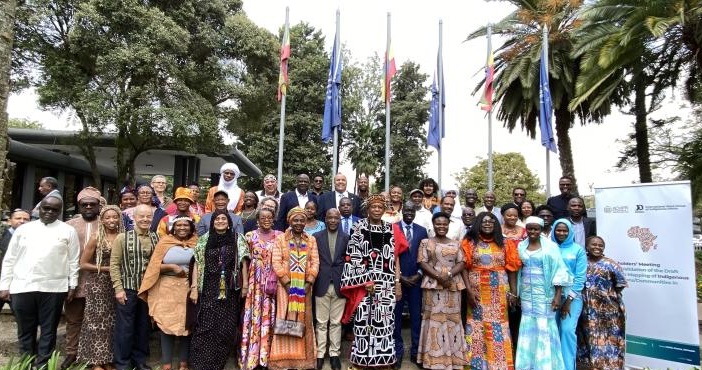
ADDIS ABABA (Ethiopia): The African Commission on Human and Peoples’ Rights (ACHPR) held a two-day validation workshop for the draft study on Indigenous Populations and Communities in Africa.
The workshop was held in Addis Ababa in Ethiopia. Convened by the ACHPR’s Working Group on Indigenous Populations/Communities and Minorities in Africa (WGIPM), brought together 55 representatives from 23 African Union member states and a broad cross-section of stakeholders, according to a press release from ACHPR.
Participants included representatives of Indigenous communities from all five African regions – Central, Eastern, Northern, Southern and Western, besides members of the ACHPR, civil society organizations, technical experts and development partners. The United Nations Special Rapporteur on the Rights of Indigenous Peoples was also present. The workshop’s primary objective was to review and validate the draft study to ensure it comprehensively reflects the lived experiences, challenges and aspirations of Indigenous populations.
Participants conducted an in-depth review of the draft’s methodology, thematic focus and regional mapping. They offered substantive inputs to strengthen the study’s accuracy, inclusivity and contextual relevance.
Stakeholders reaffirmed a central guiding principle of Indigenous rights advocacy: “Nothing about us, without us.” This ethos underscores the need for Indigenous voices to be at the forefront of research and policy processes that affect their communities. Inputs from the workshop will be consolidated and integrated into the draft study by the Working Group and the ACHPR Secretariat. Once revised, the study will be submitted to the full Commission for consideration at an upcoming ordinary session.
The finalized study is expected to serve as a key reference for African Union member states, regional and international institutions, civil society organizations and Indigenous communities. Its findings are anticipated to help policy-making, strengthen legal frameworks and enhance efforts to promote and protect the rights of Indigenous populations across Africa.
Click here to follow our WhatsApp channel and get instant updates