DUNCAN (British Columbia, Canada): Federal and Indigenous leaders together unveiled a plaque on Quw’utsun Territory earlier this week to honor the national historic significance of the Coast Salish knitters and the Cowichan sweater, a defining Indigenous textile tradition rooted in the Cowichan Valley.
The ceremony, held in Charles Hoey VC Memorial Park, marked a collaborative recognition of generations of artisan skill, cultural continuity and resilience.
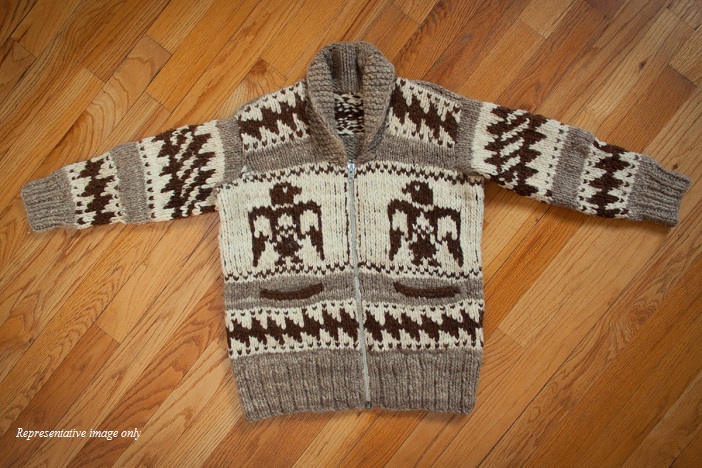
The commemorative plaque, installed on a custom stand, features imagery of the hand-knit sweater and the woolly dog that once provided the fiber. The City of Duncan supported the placement of the plaque, which is now a visible reminder of the tradition that emerged in the late 19th century and continues today.
Speakers at the event highlighted how the Cowichan sweater reflects more than utilitarian clothing. Elders and knowledge keepers worked with Parks Canada to incorporate the Hul’q’umi’num’ language on the plaque alongside English and French, underscoring the community’s role in shaping the narrative and transmitting cultural knowledge through fiber preparation, spinning and knitting.
Chief Cindy Daniels of the Cowichan Tribes described the sweater as “distinctly Quw’utsun,” acknowledging knitters’ expertise and the economic and cultural role the craft has played for families. She noted that the recognition celebrates the endurance of Indigenous innovation while also confronting a history of cultural misappropriation and imitation that knitters have had to challenge.
The federal government’s involvement was framed as part of broader efforts to share Indigenous histories within Canada’s national story. Canadian Minister for Environment, Climate Change and Nature Julie Dabrusin said that designating the Cowichan sweater as nationally significant reflects a more inclusive understanding of the country’s past. She emphasized that Indigenous voices should lead their own stories and that such recognition aids reconciliation by acknowledging cultural contributions that have long been overlooked.
Officials also highlighted the enduring legacy of the Cowichan knitting tradition beyond regional boundaries. While the craft began with Coast Salish women integrating longstanding fiber processing techniques with European knitting methods, the sweater has grown in global recognition for its unique style and craftsmanship. Today, authentic Cowichan sweaters remain hand-knit and are prized for their warmth and durability.
The event aligns with Parks Canada’s mandate to cooperate with Indigenous Peoples in recognizing and preserving cultural heritage. By formally acknowledging the Cowichan knitters and their work as an event of national historic significance, authorities aim to educate residents and visitors about the cultural richness of Indigenous textile traditions and their place within the broader tapestry of Canadian history.
The Cowichan sweater was first designated as nationally significant in 2011, and the plaque project involved contributions from multiple partners to ensure cultural accuracy and respect. The installation in a public space is intended to foster ongoing learning and appreciation of the craft and the people who sustain it.
Recognition of the Cowichan knitting tradition as a National Historic Event in Canada marks a significant moment in the acknowledgment of Indigenous cultural practices as living heritage rather than artifacts of the past. This designation recognizes not a static object or location, but an ongoing cultural practice sustained through community, memory and labor.
Click here to follow our WhatsApp channel and get instant updates