TECATE (Baja California, Mexico): Construction of sections of the United States-Mexico border wall is causing damage to sacred Indigenous sites, including culturally significant mountain landscapes in northern Mexico and adjoining border regions, Indigenous leaders and community members have alleged.
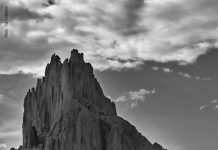
The concerns focus on ongoing construction activity linked to the expansion of border barriers along parts of the 1,954-mile frontier. Heavy machinery, blasting and ground clearing have been reported in areas that Indigenous communities identify as spiritually significant and tied to creation stories, ceremonial practices and ancestral history. One of the key sites cited is Kuuchamaa Mountain, which is regarded by the Kumeyaay people as a sacred place spanning both sides of the border region.
In Arizona, where the Patagonia Mountains descend to the border, the wall could block a wildlife corridor for endangered ocelots and jaguars. Jaguars have long coexisted with the Tohono O’odham, who consider the species “spiritual guardians”.
Contractors last month also carved through a massive 1,000-year-old fish-shaped geoglyph called “Las Playas Intaglio.” The rare drawing, etched into the desert floor much like Peru’s Nazca Lines, was created on a lava field in what is now the Cabeza Prieta National Wildlife Refuge. The Tohono O’odham Nation said it had pointed out the site on its ancestral land for contractors to avoid.
In Sunland Park, on New Mexico’s border with Mexico, blasts were carried out on Mount Cristo Rey, a pilgrimage site topped with a limestone crucifix. A strip of the mountain owned by the Roman Catholic Church is sought to be taken over for wall construction. The Diocese of Las Cruces asked a judge this month to deny the land transfer as an affront to religious liberties and the “faithful who seek to commune with God on Mount Cristo Rey.”
In western Texas, the government in February notified ranchers on the Rio Grande east of Big Bend National Park of its interest in their land that contains canyonland pictographs and petroglyphs. “There are pictographs, paintings of shaman figures and various things that we don’t know how to interpret,” said a community member.
Members of the Inter-Tribal Association of Arizona, which represents 21 tribes, traveled to Washington last month to lobby against a 20-foot (6-meter) secondary wall being built along that section of the border, as well as a primary 30-foot (9-meter) bollard wall planned on Tohono O’odham tribal lands.
Indigenous leaders say construction work, including blasting and bulldozing in mountainous terrain, is directly impacting these landscapes. They argue that the activity is not only physically altering the land but also disrupting spiritual relationships tied to it. Community members describe the mountain as a living presence central to cultural identity and traditional belief systems.
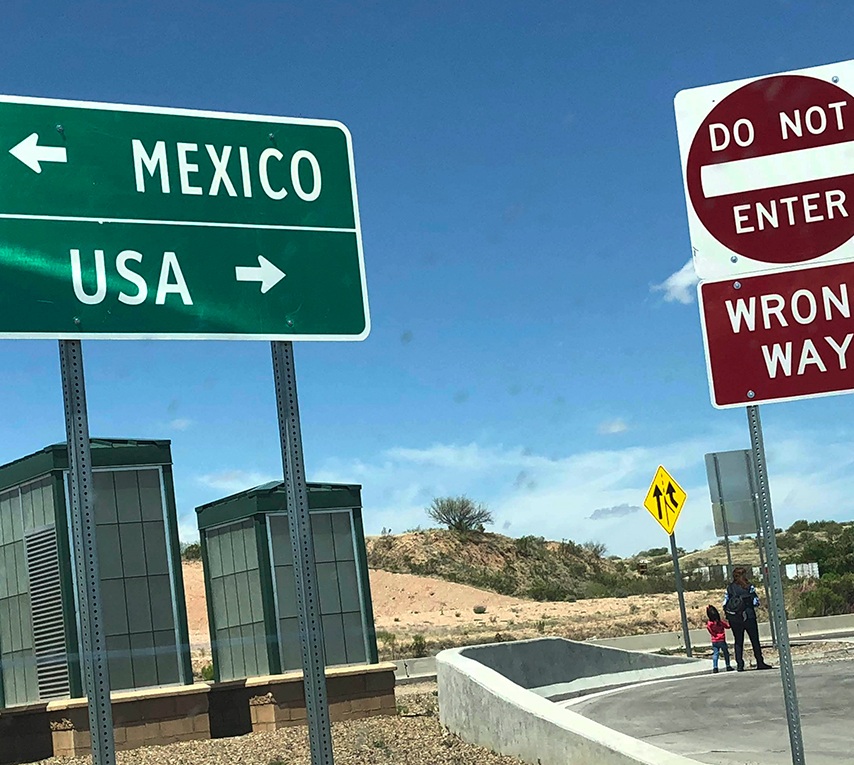
The dispute is part of a broader long-standing conflict over border infrastructure in Indigenous territories that extend across the US-Mexico boundary. Several Indigenous nations, including the Kumeyaay and the Tohono O’odham, have historically opposed sections of border wall construction, arguing that the international boundary divides their ancestral lands and restricts access to sacred and cultural sites.
The modern US-Mexico border was established through 19th-century treaties that divided territories long inhabited by Indigenous peoples. Over time, increased border enforcement and wall construction have further fragmented these communities, limiting cross-border movement and complicating traditional practices that depend on access to land on both sides of the boundary.
Authorities responsible for border infrastructure have previously stated that efforts are made to minimize environmental and cultural impacts and that alternative methods such as surveillance technology are used where possible. However, Indigenous groups maintain that physical construction continues to affect culturally sensitive areas despite such assurances.
The Trump administration wants walls to cover at least 1,400 miles (2,250 kilometers) of the border “to keep people and drugs from entering the US.” The administration has allocated over $46 billion to the effort. Contracts have been awarded or construction has started on over 600 miles (966 kilometers) of the new border wall, while another double wall is planned or under construction along another 370 miles (596 kilometers).
Click here to follow our WhatsApp channel and get instant updates