ITANAGAR (Arunachal Pradesh, India): The government in Arunachal Pradesh has formed four committees to examine key issues related to the tribal community in the state, including ways for re-verification Scheduled Tribe (ST) certificates.
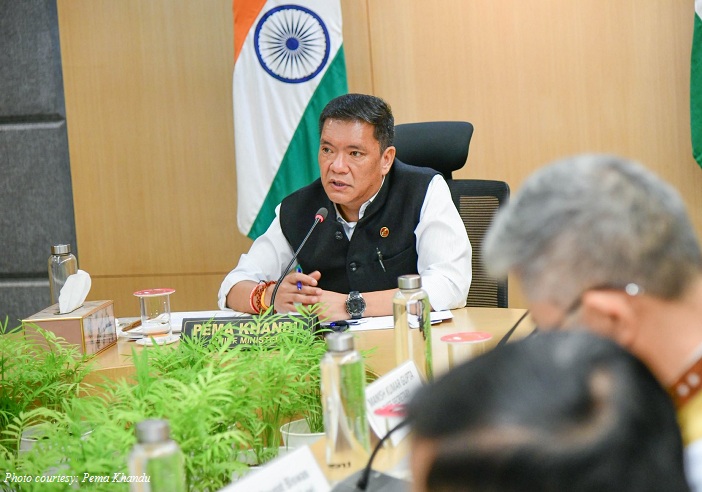
The announcement was made by Chief Minister Pema Khandu here recently. Khandu said four high-powered committees will be formed to examine issues related to Arunachal Pradesh Scheduled Tribe (APST) certificates, non-APST offspring, the Inner Line Permit (ILP) framework and concerns over demographic changes in the state. The announcement came after Khandu held several meetings with Indigenous and tribal organizations.
Khandu said that the government had agreed to form four high-powered committees after discussions with several organizations, including Arunachal Indigenous Tribes Forum (AITF) and ST Bachao Andolan Committee, besides legal experts, on the four key demands raised by the ST Bachao Andolan. “The committees will examine and recommend measures on re-verification of APST certificates, non-APST offspring issue, strengthening the ILP framework and review of ILP Guidelines 2026, and illegal infiltration,” Khandu said in a social media post.
“Each committee will be led by a cabinet rank functionary and will include representatives from AITF, AAPSU, ST Bachao Andolan Committee, legal experts, research scholars and women representatives to ensure a balanced, inclusive and action-oriented process,” he said.
The committees would work through consultations and field studies before submitting recommendations, he also said, adding that the committees had been asked to submit their recommendations within six months, but may be given more time depending on the situation.
Re-verification of APST certificates
The re-verification of APST certificates is intended to examine the authenticity of Scheduled Tribe status claims in the state. Indigenous organizations have said that improper issuance or verification of certificates diluted constitutional protections meant for native tribal communities. The government’s proposed review seeks to address these concerns through a structured verification process. APST is the constitutionally recognized tribal status used in the state for facilities such as reservation in education and government jobs, land ownership rights, and eligibility under certain local safeguards.
The issue of infiltration, as referenced in the government’s plan, is linked by local groups to fears of unregulated entry and settlement that could affect the demographic balance in tribal regions. Indigenous organizations have consistently demanded stronger monitoring and administrative mechanisms to ensure compliance with existing laws governing entry and residency.
The decision to form the committees came after sustained demands from Indigenous tribal organizations for stronger safeguards over identity, land rights and residency protections. These organizations have long argued that the constitutional safeguard in Arunachal Pradesh require stricter implementation to preserve Indigenous identity and prevent demographic pressure from outside populations.
Arunachal Pradesh is protected under special provisions that include the ILP system that regulates entry of non-residents into the state. Khandu has already announced that the state government would set up a separate department dedicated to the ILP system to strengthen enforcement and safeguard the rights of indigenous tribal communities.
Arunachal Pradesh, a north-eastern state with a predominantly tribal population, shares international borders and has historically placed strong emphasis on protecting Indigenous identity and customary rights.
Non-APST offspring issue
“Non-APST offspring issue” refers to a sensitive administrative and political concern in Arunachal Pradesh related to the status and eligibility of children born to mixed-parentage families where the mother is an APST but the father is not. The issue is whether the child should be granted APST status, and there are concerns that issuing APST certificates in such cases could dilute tribal protections.
Indigenous groups argue that issuing certificates to children of mixed or non-tribal backgrounds could weaken the constitutional safeguards. On the other hand, families affected by these rules often raise concerns about fairness and clarity, especially when one parent is legitimately APST and the child’s status becomes disputed due to administrative interpretation or documentation gaps. This issue is tied to the broader debates in the state, especially about APST certificate verification and possible misuse.
Click here to follow our WhatsApp channel and get instant updates