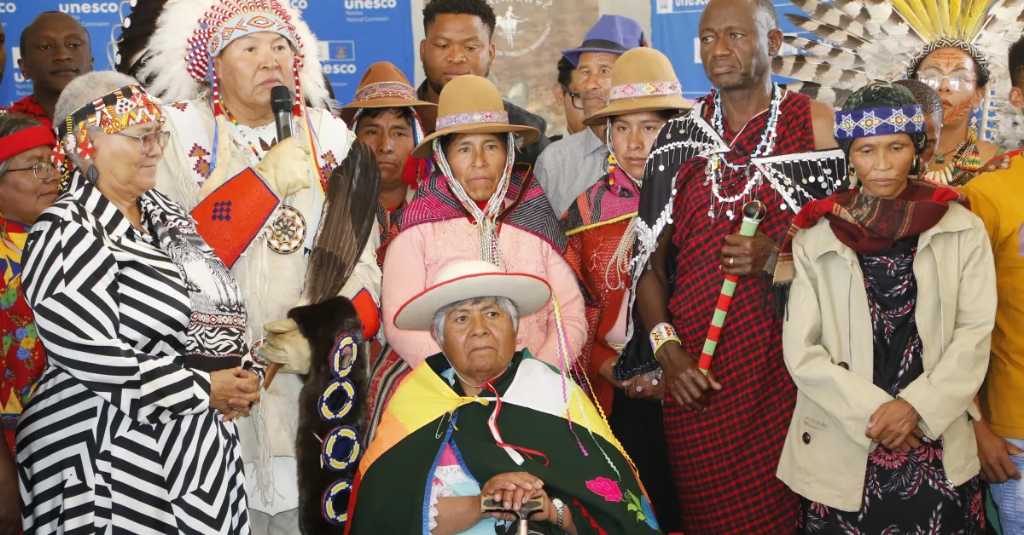
Indigenous leaders from many parts of the world came together in Namibia for a major meeting aimed at sharing knowledge, strengthening cultural traditions, and discussing how Indigenous peoples can contribute more effectively to protecting nature and shaping sustainable futures. The gathering took place under the theme “Custodians of Ecology: Shared Worlds, Shared Futures,” and brought together leaders and knowledge holders from countries including Namibia, Mexico, Colombia, Peru, Chile, Brazil, Argentina, Canada, Malaysia, Kenya, Tanzania, and South Africa. The meeting was designed to provide a space where Indigenous representatives could share traditional ecological knowledge and approaches that have long guided the stewardship of lands and waters.
Participants exchanged stories of how their communities have sustained ecosystems for generations and explored ways that these time-tested practices can help address urgent global challenges such as climate change, biodiversity loss, and environmental degradation. They discussed how ancestral knowledge systems, rooted in deep connections with local landscapes, offer invaluable insights into sustainable use of natural resources, resilience, and coexistence with wildlife. These discussions acknowledged that protecting biodiversity is inseparable from respecting and upholding Indigenous cultures, languages, and worldviews.
The meeting also highlighted the role that Indigenous people play in preserving cultural heritage and ecological balance. Many Indigenous traditions include practices that maintain soil and water quality, protect wildlife, and help landscapes recover from environmental pressures. Participants emphasized that these practices are not only cultural expressions but also practical approaches to conservation that could inform broader policy frameworks and international efforts to slow biodiversity decline.
In addition to sharing ecological wisdom, the event served as a platform for leaders to advocate for greater recognition of Indigenous rights in global decision-making processes. They underscored the need for meaningful inclusion of Indigenous voices in arenas where policies affecting land, water, and biodiversity are shaped. Participants called for strengthened partnerships between Indigenous communities, governments, scientists, and international organizations to ensure that Indigenous perspectives and solutions are fully integrated into sustainability initiatives.
The gathering in Namibia also explored how cultural heritage and identity are linked to environmental protection. Traditional ceremonies, languages, and community practices were highlighted as vital not only for cultural continuity but also for ecological knowledge transmission. Leaders stressed that when cultural heritage is undermined, valuable insights into land stewardship are lost. By foregrounding Indigenous heritage in global discussions about biodiversity, the meeting aimed to elevate both cultural and ecological resilience.
Representatives praised the opportunity to build networks across continents, noting that the exchange of ideas fosters solidarity and shared strategies. Many expressed hope that the connections forged at the Namibia gathering would lead to concrete collaborations and actions that reinforce Indigenous leadership in environmental governance. The event demonstrated that Indigenous knowledge and cultural practices are essential components of any serious effort to protect the natural world and ensure sustainable futures for all communities.