
NEW DELHI (India): India’s top court has stayed its own recent judgment that laid down a uniform definition of the Aravalli hills and ranges, putting on hold a ruling that had far-reaching implications for mining, construction and environmental protection across northwestern India. The Supreme Court of India said key aspects of the definition and its practical consequences require further examination and clarity before they can be implemented.
The earlier verdict, delivered on November 20, had accepted recommendations of a committee constituted by the Indian government’s Ministry of Environment, Forest and Climate Change to define the Aravallis for regulatory purposes. Under that framework, an “Aravalli Hill” was defined as a landform in specified districts rising at least 100 meters above the local relief, while an “Aravalli Range” was defined as a cluster of two or more such hills located within 500 meters of each other. The aim was to introduce uniformity in identifying the Aravalli landscape across the Indian states of Delhi, Haryana, Rajasthan and Gujarat, where differing state-level definitions have long complicated enforcement.
Soon after the judgment, multiple states and stakeholders flagged concerns that the definition was overly narrow and could exclude ecologically significant portions of the mountain system. Critics argued that relying primarily on elevation thresholds ignored the geological continuity and ecological functions of the Aravallis, particularly in areas where mining, deforestation and urbanization have already flattened or fragmented hill features. There were also fears that large tracts currently treated as part of the Aravallis under existing notifications could lose protection, opening them up to renewed mining and development pressure.
Taking note of these objections, the Supreme Court ordered that all directions flowing from the November judgment be kept in abeyance. The bench indicated that a more comprehensive and scientifically grounded review is needed, and that a high-powered expert committee would be required to reassess how the Aravalli hills and ranges should be identified and protected. Notices were issued to the Indian government and the governments of the states concerned, as well as other parties. The matter is now slated for detailed hearing.
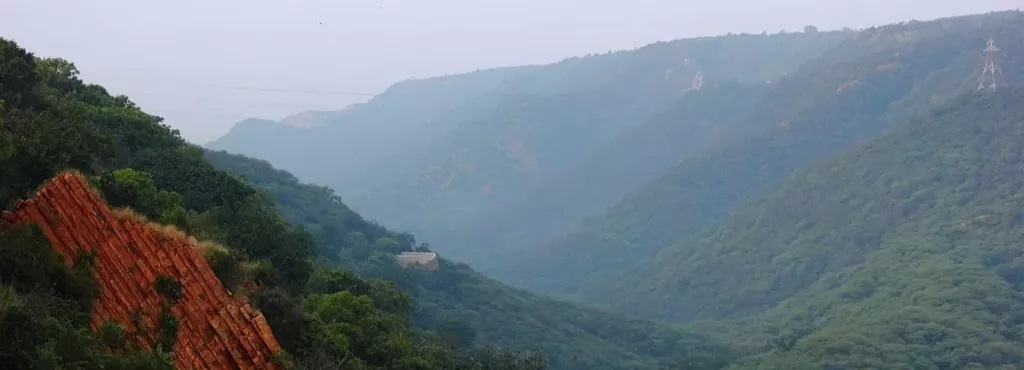
The Aravalli range, stretching roughly 700 kilometers from Gujarat through Rajasthan and Haryana to Delhi, is considered one of the oldest mountain systems in the world. Despite its relatively low elevation compared to the Himalayas, the range plays a crucial role in shaping regional ecology. It acts as a natural barrier against the eastward expansion of the Thar Desert, supports forests and wildlife corridors, and is vital for groundwater recharge in water-stressed regions of western and northwestern India.
Over decades, the Aravallis have faced extensive degradation due to mining, stone crushing, illegal construction and urban sprawl, particularly around the National Capital Region. The Supreme Court has repeatedly intervened in the past to restrict mining and protect the range, including landmark orders banning mining in parts of Haryana and Rajasthan. However, the absence of a single, clear definition has remained a persistent challenge, leading to regulatory loopholes and inconsistent enforcement.
The current stay reflects the court’s recognition that a technical definition, if poorly framed, could undermine environmental safeguards rather than strengthen them. Environmental groups have welcomed the pause, saying it provides an opportunity to adopt a definition that reflects the geological history of the Aravallis, their ecological value and the degraded realities, rather than relying solely on present-day elevation. The final outcome is expected to shape the future of conservation, land use and development across one of India’s most environmentally sensitive regions.
Click here to follow our WhatsApp channel and get instant updates