NEW DELHI (India): India’s Ministry of Tribal Affairs has stepped up efforts to strengthen livelihood frameworks for tribal communities by bringing multiple government ministries together to coordinate development initiatives under the Dharti Aaba Janjatiya Gram Utkarsh Abhiyan (DAJGUA).
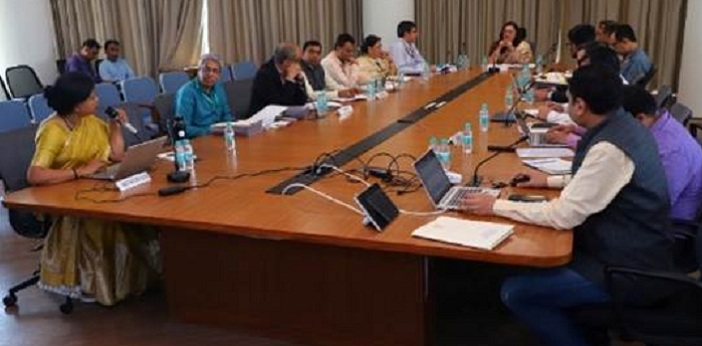
The initiative was discussed during a consultative workshop organized by the ministry with senior officials and experts from key government departments in the national capital earlier this month.
The government departments represented at the workshop included the Ministry of Agriculture and Farmers Welfare, Department of Animal Husbandry and Dairying, Ministry of Food Processing Industries, Ministry of New and Renewable Energy, and the Department of Fisheries. The discussion focused on improving the implementation structure of livelihood programs targeting tribal households across the country.
Officials said the workshop aimed to address operational challenges and develop a more structured and outcome-driven approach to livelihood planning for tribal regions. The effort seeks to move beyond fragmented development programs toward coordinated and sustainable livelihood ecosystems that can generate stable incomes for tribal communities.
DAJGUA, the flagship initiative of the Ministry of Tribal Affairs, was launched in October 2024 in Hazaribagh in Jharkhand as part of a broader strategy to accelerate development in tribal regions. The program brings together the efforts of 17 ministries and covers 25 major interventions across 63,843 tribal-majority villages, reaching an estimated 5.5 crore tribal citizens.
During the consultations, participants emphasized the need to design standardized and financially viable livelihood packages that clearly define eligibility norms, implementation stages and expected income improvements. Officials explored integrated models combining agriculture, small livestock rearing, fisheries development and renewable-energy-supported micro-enterprises to create diversified sources of income in tribal areas.
The ministry also stressed the importance of aligning resources from different government schemes to ensure coordinated planning by states and to prevent duplication of efforts. Inputs from the workshop are expected to contribute to the creation of a unified monitoring and evaluation system for DAJGUA, enabling better tracking of income and livelihood outcomes for tribal households.
Secretary in the Ministry of Tribal Affairs Ranjana Chopra said the consultations marked an important step toward institutionalizing cooperation between ministries responsible for agriculture, fisheries and other allied sectors. She said closer coordination would help ensure that tribal families receive well-structured and scalable support rather than isolated benefits under separate schemes.
Chopra also urged states to develop locally relevant livelihood proposals tailored to the socio-economic and ecological conditions of tribal regions. She suggested that states identify innovative models linking forest rights lands, fisheries resources, livestock systems and traditional agro-ecological practices to sustainable income generation for Scheduled Tribe communities.
Officials noted that tribal areas often face persistent challenges including low agricultural productivity, limited extension services and poor market access. Integrated planning that connects production, value addition and market linkages could help overcome these constraints and improve income stability in remote regions.
The workshop also highlighted the importance of building long-term livelihood clusters that combine multiple activities and provide reliable income streams for tribal households. Greater coordination between the Tribal Affairs Ministry and key line departments such as agriculture and fisheries is expected to play a critical role in sustaining these initiatives.
India is home to more than 700 recognized tribal groups, many of whom live in remote and forested regions with limited access to economic opportunities. Government programs in recent years have increasingly focused on livelihood diversification, market integration and sustainable resource use to improve living standards in tribal areas.
Click here to follow our WhatsApp channel and get instant updates