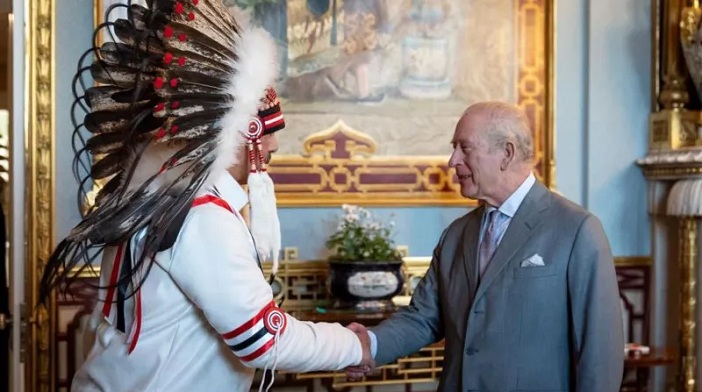
LONDON (United Kingdom): British monarch King Charles III has expressed concerns about the growing separatist movement in Alberta after a delegation of First Nations chiefs from western Canada raised the issue with him during a private audience at Buckingham Palace here earlier this month.
Leaders from the Confederacy of Treaty 6 First Nations travelled to the British capital to bring attention to how talk of secession could threaten historical treaty agreements signed with the Crown in the late 19th century, and to urge the monarch to reaffirm the ongoing nation-to-nation relationship.
The meeting took place as grassroots campaigns in Alberta seek signatures to set off a referendum on separation, driven in part by frustration over federal policies, fiscal arrangements and the province’s energy-based economy that have fuelled sentiments of distinct identity and discontent with Ottawa. Indigenous leaders warned the King that these movements could undermine legal and constitutional protections that form the basis of agreements like Treaty 6, which was signed in 1876 between Plains and Woods Cree, Assiniboine and other bands on one side, and representatives of the Crown on the other.
Grand Chief Joey Pete of the Confederacy told reporters that he had informed the King of the separatist movement and its implications for treaty rights, and said the monarch appeared genuinely concerned and keen to learn more about the situation. The Chiefs also insisted that King Charles should consider issuing a proclamation affirming their treaties, seen by many Indigenous people as solemn and enduring promises made by the Crown. The delegation also invited the monarch to attend the 150th anniversary of Treaty 6 later this year in Edmonton, a gesture leaders said would symbolize commitment to the treaty relationship.
The government in Alberta has rejected the demand or separation outright and emphasized a united Canada. The growing debate, however, highlights deeper questions about national cohesion, resource governance and the place of Indigenous treaty rights in discussions of constitutional change. First Nations leaders have been particularly vocal about ensuring their voices be heard in any wider talks about constitutional arrangements or provincial-federal relations, stressing that treaties are foundational to Canada’s legal and political framework and must be honored regardless of any future constitutional developments.
Many Indigenous leaders are concerned about the Alberta separatist movement because it could threaten their treaty rights and political agreements. Much of Alberta lies on land covered by treaties such as Treaty 6, Treaty 7 and Treaty 8, which were signed between First Nations and the British Crown long before Alberta became a province. These treaties guarantee certain rights related to land, resources, and self-governance, and Indigenous leaders argue that their relationship is with the Crown and Canada, not with the province of Alberta. If Alberta were to separate from Canada, it is unclear whether those treaties would still be honored or who would be responsible for upholding them. Indigenous nations also say that major constitutional changes affecting their lands cannot happen without their consent. Because of this uncertainty and the risk that Indigenous rights could be weakened or ignored in an independent Alberta, many Indigenous leaders have voiced strong concerns about the separatist movement.
Click here to follow our WhatsApp channel and get instant updates