HOBART (Tasmania, Australia): A magistrate in Tasmania has rejected an application to have a trespass case arising from anti-logging protests shifted for hearing to Aboriginal land, rejecting what is believed to be an unprecedented request in the state’s legal system.
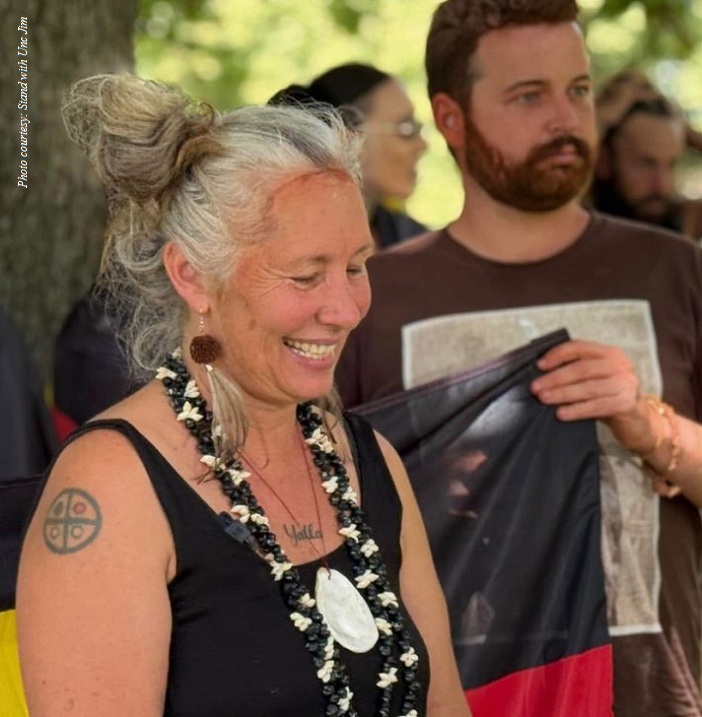
The application was brought by Ruth Langford, a Yorta Yorta and Dja Dja Wurrung woman who is representing herself in the matter. Langford sought to have her case heard at Risdon Cove, a site of cultural and historical significance to the Aboriginal people in Tasmania. She argued that the location would be more appropriate than a conventional courtroom, given the cultural dimensions of the dispute and her own connection to the place. In her view, the setting of the hearing was not merely procedural, but central to how the matter should be understood and engaged with.
Langford is facing a charge of trespass arising from protests at forestry operations in Tasmania in 2025, including actions at Snow Hill and Lonnavale. The Lonnavale allegation has since been withdrawn, leaving the Snow Hill matter as the remaining charge before the court. She has entered a plea of not guilty.
The question of where the matter should be heard was considered in the Hobart Magistrate’s Court before Chief Magistrate Catherine Geason. The defense application asked the court to depart from ordinary procedure and convene on Aboriginal land, effectively relocating the hearing to Risdon Cove.
In rejecting the application, Magistrate Geason found that there was no sufficient basis to move the proceedings outside the standard court environment. The ruling also held that the defendant (Langford) would not be placed at any disadvantage by the matter proceeding in a conventional courtroom. The decision reflects the court’s view that the requirements of procedural fairness and the administration of criminal justice could be met within the existing court setting.
The refusal means the case will continue through the normal criminal process in the Hobart Magistrate’s Court. Further procedural steps are expected to be scheduled as the matter progresses.
Langford later expressed her disappointment with the outcome. She described the ruling as a missed opportunity to acknowledge Aboriginal perspectives within formal legal processes, particularly in cases involving land, environmental protest and cultural connection. She maintained that hearing the matter on Indigenous land would have allowed for a more meaningful engagement with the context in which the alleged offence occurred.
Langford also indicated that her application was based on broader concerns about how Australian courts recognize or incorporate Aboriginal cultural frameworks within their procedures. She has continued to advocate for the protection of native forests in Tasmania and has linked her legal defense to wider questions about land use, forestry practices, and Indigenous rights.
The case sits at the intersection of environmental protest and questions of cultural recognition within the legal system. While courts in Australia operate under a uniform procedural framework, applications such as this raise issues about whether and how those procedures can accommodate Indigenous cultural considerations without departing from established legal principles.
The matter is expected to return to court for further directions at a later date, where the substantive charge of trespass will proceed under standard magisterial court processes.
Click here to follow our WhatsApp channel and get instant updates