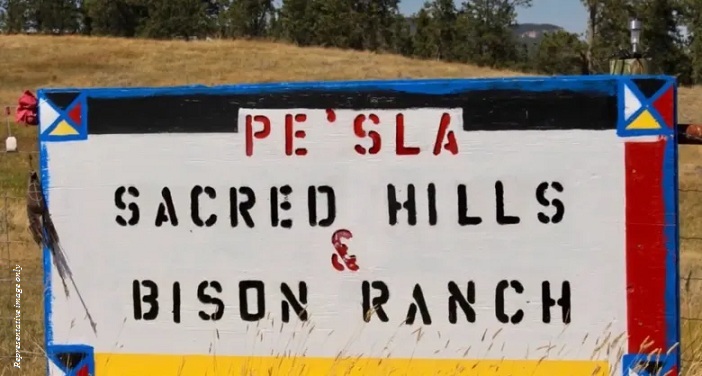
RAPID CITY (South Dakota, United States): Tribal and environmental advocates have asked a federal court to issue an emergency order to halt planned drilling near Pe’ Sla, a site in South Dakota’s Black Hills that is considered sacred by Indigenous communities.
The request is part of an ongoing lawsuit challenging a permit granted by the United States Forest Service for exploratory mineral drilling in the area. The plaintiffs argued that allowing drilling to proceed while the case is pending would cause irreparable harm to a site used for prayer, ceremony and cultural practices for generations.
The proposed project involves exploratory drilling for graphite, a mineral used in industrial applications including electric vehicle batteries. The permit authorizes a private company to conduct drilling operations on federally managed land near Pe’ Sla, including the construction of drill pads and related ground disturbance activities.
Advocacy groups, including Indigenous-led organizations and environmental coalitions, contend that the approval process violated federal law by relying on a limited environmental review. They argue that the Forest Service improperly applied a categorical exclusion under the National Environmental Policy Act, avoiding a more comprehensive analysis of environmental and cultural impacts.
The emergency motion seeks a temporary restraining order to stop any drilling activity until the court can fully consider the legal challenge. Plaintiffs warn that once drilling begins, damage to the land and disruption to religious practices could not be undone.
Pe’ Sla holds deep spiritual significance for the Lakota and other Plains tribes and has been used for ceremonial purposes for thousands of years. Tribal leaders and advocates say the area is not only a cultural landmark but also part of a broader ecosystem that includes critical water sources.
Concerns about water contamination have been central to the opposition. The site lies within the Rapid Creek watershed, which supplies water to nearby communities. Opponents of the project argue that drilling could introduce pollutants or disrupt underground water systems, posing risks to both local residents and downstream tribal populations.
The dispute reflects broader tensions over resource extraction on or near Indigenous lands in the United States. Similar conflicts have emerged in recent years, including high-profile protests against infrastructure projects that threatened sacred sites and water resources.
In the case of Pe’ Sla, tribal nations previously took steps to protect the area. In 2014, several tribes collaborated to purchase and preserve key portions of the site, seeking to safeguard its cultural and spiritual integrity. Advocates say the current drilling proposal undermines those efforts and sets a precedent for further industrial activity in the region.
Federal officials have maintained that the permit complies with existing regulations, but critics argue that the decision fails to adequately account for treaty rights and the religious importance of the land.
The court has not yet ruled on the emergency request. A decision on whether to temporarily block the drilling could determine whether work proceeds while the broader legal challenge continues.
Click here to follow our WhatsApp channel and get instant updates