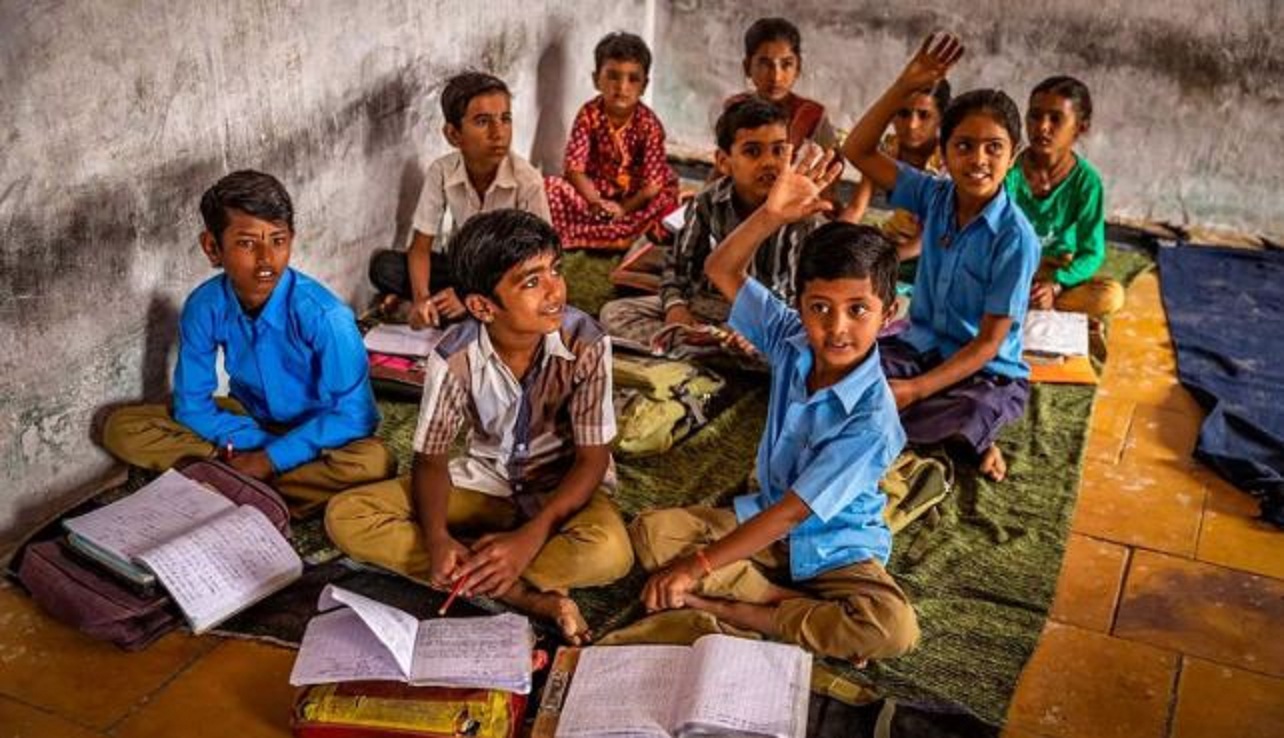
BHUBANESWAR (Odisha, India): The government in the Indian state of Odisha has launched a new initiative to teach tribal students in pre-schools in their native languages, aiming to improve early childhood education and literacy rates among Scheduled Tribe communities.
Under the program, titled “Aame Padhibaa Aama Bhasare” (We will learn in our language), children aged three to six enrolled in Anganwadi centers across six tribal districts will receive instruction in their mother tongue rather than in Odia. The pilot program will initially cover Keonjhar, Kandhamal, Rayagada, Gajapati, Malkangiri, and Nabarangpur, using six tribal languages. Anganwadi workers will undergo specialized training to deliver the curriculum effectively, and educational foundations are collaborating with the government to develop teaching materials and monitor progress.
Officials say the initiative aligns with the National Education Policy 2020, which emphasizes foundational learning in the mother tongue to enhance comprehension, cognitive development, and retention among young learners. Studies indicate that early education in a child’s native language improves school readiness, reduces early dropouts, and builds confidence in children before they transition to formal schooling in regional or national languages. By starting with six tribal languages, the government plans to expand the program gradually to all districts with significant Scheduled Tribe populations and eventually cover all 21 recognized tribal languages in the state.
Odisha has a long history of multilingual education initiatives for tribal communities. Previous state programs have developed primers, storybooks, and learning resources in local languages to boost engagement in early childhood education. However, challenges persist, including limited teaching resources, the absence of widely used scripts for some tribal languages, and a shortage of trained educators. The new initiative addresses these challenges by focusing on capacity building for Anganwadi workers and creating curriculum materials tailored to each language.
Officials said that learning in the mother tongue not only preserves tribal languages and culture but also strengthens children’s overall academic foundation. The program also seeks to bridge the gap between formal education and the home environment, where many children speak only their native language. By integrating cultural context into lessons, the government aims to make learning more relatable and engaging for young learners.
Experts note that early childhood is a critical period for language development, cognitive growth, and socialization. Children who receive education in a familiar language demonstrate higher levels of participation, confidence, and academic performance. Odisha’s move to prioritize education in mother-tongue reflects a broader trend across India, where policymakers are increasingly recognizing the importance of culturally and linguistically responsive education to achieve inclusive learning outcomes.
The government plans to conduct continuous assessments to refine the curriculum, provide feedback to Anganwadi workers, and ensure that the program’s expansion is informed by pilot results. With this initiative, Odisha aims to strengthen early childhood education in tribal areas, promote linguistic diversity, and create a model for other states with significant indigenous populations.
An Anganwadi is a type of rural child care center in India, established under the Integrated Child Development Services (ICDS) program, which was launched in 1975. The word “Anganwadi” literally means “courtyard shelter” in Hindi, reflecting its community-based approach.
Click here to follow our WhatsApp channel and get instant updates