YAOUNDE (Cameroon): Indigenous forest communities in Cameroon have launched a new initiative aimed at securing legal recognition of their ancestral lands and strengthening community control over forest management, a development supporters describe as a major step toward rights-based conservation and land reform.
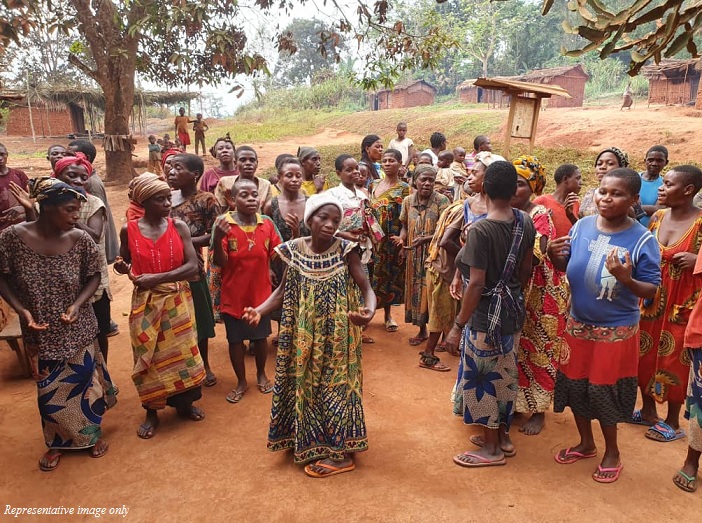
The project, titled Securing and Sustainable Land and Forest Management for Indigenous Peoples and Local Communities, is being led by indigenous organizations representing Baka and Bagyeli forest peoples. It seeks to address long-standing land insecurity by supporting communities to document customary land use, defend their territories and engage more effectively with state institutions responsible for land and forest governance.
At a national workshop in Yaounde, community leaders outlined plans to work directly with households affected by land loss and unresolved tenure disputes. The project focuses on participatory mapping, legal awareness and advocacy, as well as the development of community-led strategies for sustainable forest use. Particular emphasis is being placed on the inclusion of women and young people, who are often excluded from formal land decision-making despite their central role in community livelihoods.
Cameroon’s land tenure system has historically posed challenges for indigenous peoples. Most land and forests are legally classified as state property unless formally registered, a process that is costly and poorly adapted to customary land use practices such as hunting, gathering and shifting cultivation. As a result, many indigenous communities lack legal protection when land is allocated for logging, agribusiness, mining or infrastructure projects.
These pressures have intensified over the past two decades as Cameroon has promoted large-scale agricultural and extractive investments as part of its development strategy. Indigenous groups have repeatedly raised concerns over displacement, restricted access to forests and the erosion of cultural traditions tied to ancestral lands. Disputes over land allocation have also contributed to local conflicts and environmental degradation.
Supporters of the new initiative argue that securing indigenous land rights can help address both social and environmental challenges. Studies across the Congo Basin and other forest regions have shown that forests managed by indigenous and local communities often experience lower deforestation rates than those under centralized control. Indigenous knowledge systems, developed over generations, are widely seen as critical to biodiversity conservation and climate resilience.
The project also aligns with ongoing national discussions on land reform in Cameroon. Authorities have acknowledged the need to modernize land laws and better account for customary tenure, particularly for vulnerable groups. However, progress has been slow, and indigenous advocates say practical mechanisms for recognition and enforcement remain weak.
By placing indigenous organizations in the lead, the initiative aims to shift the balance of power toward communities most affected by land decisions. Technical partners will provide support in monitoring, evaluation and engagement with policymakers, while communities retain control over priorities and implementation on the ground.
Project leaders say the ultimate goal is not only to reclaim land but to establish durable systems that allow indigenous peoples to manage forests in a sustainable manner, protect their livelihoods and pass on cultural knowledge to future generations. If successful, the initiative could serve as a model for similar efforts elsewhere in Central Africa.
For Cameroon’s indigenous forest peoples, the project represents a move from informal stewardship toward formal recognition, offering a pathway to greater security in a landscape increasingly shaped by competing economic and environmental demands.
Click here to follow our WhatsApp channel and get instant updates