IMPHAL (Manipur, India): Kuki-Zo tribal groups have called for a dawn-to-dusk “total shutdown” in the hill districts and also called for a social boycott of Kuki-Zo legislators to protest their decision to join the newly formed government in the Indian state of Manipur.
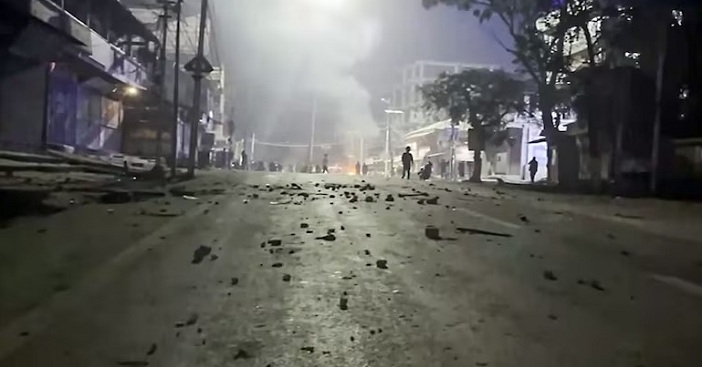
The call for the shutdown and social boycott comes after a fresh round of violence over the issue in the state’s Churachandpur district on Thursday, during which protestors clashed with security forces and also indulged in stone-pelting.
The protestors are opposing the decision by three legislators belonging to the Kuki-Zo community to participate in the new government in the state, led by the Bharatiya Janata Party (BJP). These members of the legislative assembly (MLAs) of Manipur are Nemcha Kipgen, who has become the Deputy Chief Minister in the government, along with L M Khaute and N Sanate. Their effigies were set afire in Churachandpur district. Similar protests were held in Kangkopki and Tengnoupal districts of the state.
The three legislators have been accused of betraying the community’s demand for a separate administration.
The Kuki Women’s Organization for Human Rights (KWOHR) and the Indigenous Tribal Leaders Forum (ITLF) jointly staged a protest march in Churachandpur, raising slogans demanding Kipgen’s resignation.
The Kuki Zo Council (KZC) has accused the three MLAs of violating a resolution that no legislator from the community would join any government until the Government of India gave a written assurance for a separate Union Territory and legislator for the areas inhabited by the Kuki Zo tribe in the state.
There are ten MLAs in the Manipur Legislative Assembly who belong to the Kuki-Zo tribe, seven of whom belong to the BJP.
The latest round of violence comes on the heels of a prolonged ethnic conflict in Manipur primarily between the Meitei community in the Imphal Valley and tribal groups, including the Kuki-Zo, inhabiting the hill districts. The conflict, rooted in disputes over land ownership, political representation and demands for Scheduled Tribe status, has resulted in repeated cycles of violence. Since the conflict began, Manipur has seen hundreds of fatalities and the displacement of tens of thousands of people.
At the heart of the dispute is the demand by the Meitei community for Scheduled Tribe status. Other tribal groups strongly oppose the demand fearing loss of land rights, identity and other benefits.
In India, Scheduled Tribes are Indigenous and historically marginalized communities entitled to legal protections and affirmative action. The term comes from a “schedule,” or official list in the country’s Constitution, of groups recognized as having faced long-term social, economic and geographic disadvantage. This status is broadly comparable to protections given to Native American tribes in the United States or First Nations peoples in Canada, though the legal systems differ.
Click here to follow our WhatsApp channel and get instant updates