
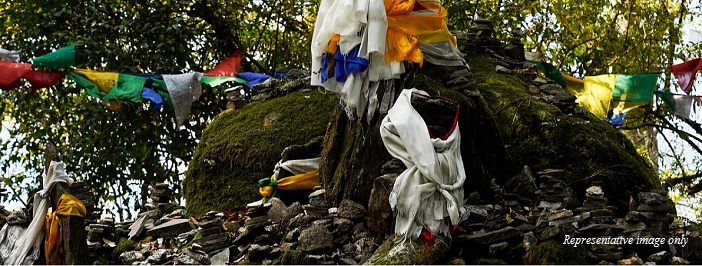
GANGTOK (Sikkim, India): A recent study conducted in the Indian state of Sikkim has documented how sacred groves function as key reservoirs of medicinal plants and sustain traditional healing practices among Indigenous communities and healers.
The research recorded the ethno-medicinal knowledge of local groups, underscoring the role of sacred groves in preserving both biodiversity and cultural health systems. These forest patches, considered sacred by communities, support a wide range of plant species traditionally used to treat ailments and maintain well-being. The findings indicate that the groves act as living pharmacies, anchoring health practices that predate modern medical infrastructure.
Sacred groves are stretches of natural vegetation protected by religious beliefs and communal norms, often associated with deities, ancestral spirits or spiritual traditions. In India, they are found across diverse landscapes, from the Himalayan foothills to the dry scrublands of Rajasthan and the rainforests of the Western Ghats, and vary in size from small clusters of trees to large forest tracts. They have historically served as critical loci for biodiversity conservation, cultural identity and resource sustainability, maintained by customary rules that prohibit harvesting, hunting or cutting wood within their boundaries.
In Sikkim, these groves include both Gumpa forests tied to Buddhist monasteries and Devithan groves dedicated to Hindu goddesses. The new study documented how Indigenous healers rely on plants harvested from these groves to prepare traditional remedies. These plants are used to treat a range of health conditions, from common illnesses to specific ailments, drawing on knowledge passed down through generations. Such ethnobotanical knowledge, deeply embedded within cultural practices, is increasingly recognised as an important complement to formal healthcare, particularly in remote and rural areas where access to modern medical services is limited.
Sacred groves not only protect species with medicinal value but also maintain ecological functions, such as soil conservation, water regulation and carbon sequestration. These groves can act as “carbon sinks,” sequestering significant amounts of carbon relative to disturbed forest areas, while simultaneously providing habitat for rare and endemic species. Across India, groves host a variety of medicinal herbs, trees and climbers, many of which are used in Ayurvedic and other traditional systems of medicine.
Despite their importance, sacred groves face threats from urbanisation, land‑use change, invasive species and erosion of traditional belief systems. Modern development pressures can weaken community enforcement of norms that have historically protected these sites, leading to degradation of habitats and loss of biodiversity. Documentation efforts such as this recent study are aimed at recording traditional knowledge before it is further eroded by cultural and economic changes.
Click here to follow our WhatsApp channel and get instant updates
हिंदी में यहाँ पढ़ें।