
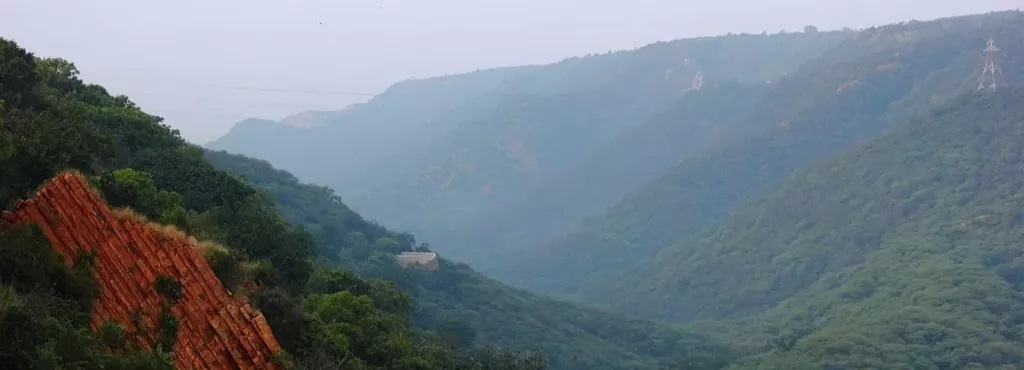
NEW DELHI (India): The Supreme Court of India has admitted an application seeking intervention in its ongoing suo motu proceedings on the definition and protection of the crucial Aravalli Hills, a case that has acquired renewed Constitutional and environmental significance amid concerns over regulatory fragmentation and ecological degradation.
The intervention application was filed by Rajendra Singh, a veteran environmentalist and convener of a non-governmental organization. The matter is being heard again consequent to under an order passed on 29 December 2025, in which the bench flagged unresolved questions surrounding the definition of the Aravalli range and the institutional processes required to address them.
In his application, Singh has sought to intervene in order to assist the court on what he describes as threshold Constitutional questions that arise before any administrative or technical exercise to delineate or classify the Aravalli landscape is undertaken. The application states that Singh was associated with earlier litigation before the apex court on mining in the Aravalli region, in which the court examined the legality of mining activities and laid down governing principles on environmental protection and the role of the state.
Singh’s application says that the present proceedings are not confined to individual development projects but concern the broader Constitutional treatment of ecological systems that operate as integrated and continuous wholes. Exercises such as drawing boundaries or classifying terrain carry legal consequences that may result in the exclusion of certain areas from Constitutional protection, thereby exposing them to alteration or degradation through downstream regulatory or private action, Singh said in his application.
The Supreme Court’s decision to admit the intervention brings an additional Constitutional dimension to a case that is being closely watched by environmental regulators, state governments, and industry stakeholders, given the Aravalli range’s ecological role across several northern Indian states and its long history of contested development and conservation policies.
In an earlier verdict, the top court had accepted recommendations of a committee constituted by the Indian government’s Ministry of Environment, Forest and Climate Change to define the Aravallis for regulatory purposes. Under that framework, an “Aravalli Hill” was defined as a landform in specified districts rising at least 100 meters above the local relief, while an “Aravalli Range” was defined as a cluster of two or more such hills located within 500 meters of each other. The aim was to introduce uniformity in identifying the Aravalli landscape across the Indian states of Delhi, Haryana, Rajasthan and Gujarat, where differing state-level definitions have long complicated enforcement.
Soon after the judgment, multiple states and stakeholders, including tribal groups in India, had flagged concerns that the definition was overly narrow and could exclude ecologically significant portions of the mountain system.
Click here to follow our WhatsApp channel and get instant updates