
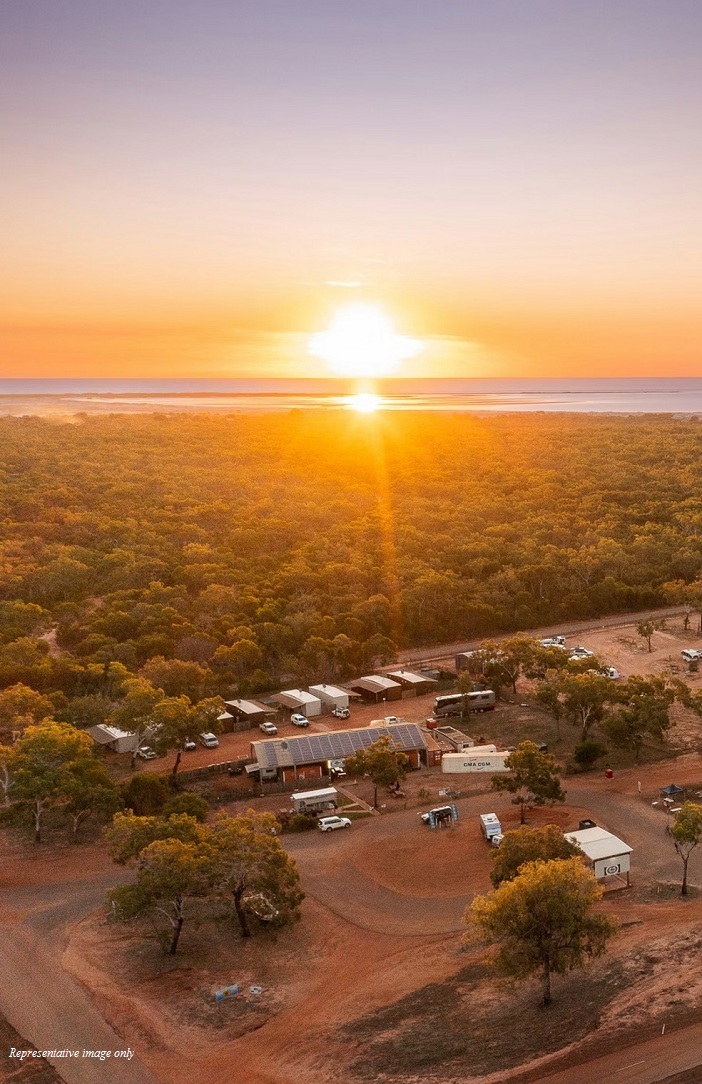
CANBERRA (Australia): Several indigenous communities in a remote towns Australia are getting their own solar farms to reduce their reliance on conventional electricity generators that run on diesel and to improve their energy security.
These include communities in Djarindjin in Western Australia, and Borroloola and Santa Teresa in Northern Territory. They are increasingly turning to locally owned renewable energy systems. This reflects a broader national trend among First Nations communities pursuing what is often described as energy sovereignty.
In Djarindjin in Western Australia’s Kimberley region, residents are planning a community-controlled solar and battery micro-grid designed to meet most of their electricity needs. The proposal, led by the Djarindjin Aboriginal Corporation (DAC), includes a multimillion-dollar renewable energy system named Aalga Goorlil, which means “sun turtle”. The project aims to generate up to around 80% of the local electricity demand through solar power supported by battery storage. It is intended to replace or significantly reduce dependence on diesel generators that have long supplied electricity in remote settlements but are vulnerable to high fuel costs and supply disruptions.
Djarindjin experiences challenges linked to distance from the main electricity grid. Power is typically generated through government-supplied diesel systems, which can be expensive to run and maintain. Rising fuel prices have further strained these systems, prompting communities to explore alternative models that offer greater stability and local control. This approach emphasizes local ownership and decision-making in energy infrastructure, particularly in areas where conventional grid connections are limited or absent. Djarindjin is home to nearly 400 Bardi and Jawi people.
In Northern Territory also, similar micro-grids are being developed or funded, often combining solar panels, battery storage and backup systems to ensure continuous supply. One such example is Borroloola, where a solar array and battery received full funding from the federal government. It is expected to meet nearly 80% of the community’s energy needs, and save almost 1.2 million liters of diesel every year of its 25-year life span. The project is funded by the Australian Renewable Energy Agency. It will save every household in the town reduce its electricity bill by almost half.
Santa Teresa, also known as Ltyentye Apurte, is another town that received funding from Australian Renewable Energy Agency for a proposed micro-grid. The micro-grid is expected to help overcome frequent power outages. However, the households will not make a complete transition to solar power. Instead, households are expected to save around 30 Australian dollars every month. The electricity generated will be sold back to the main grid, thereby generating revenue that is planned to be used to ensure economic security to the community.
Micro-grids are small-scale electricity networks that can operate independently or in connection with larger grids. By combining renewable generation with battery storage, these systems can provide more stable and locally controlled power supply.
For Indigenous communities, the shift is not only technological but also governance-related. Energy projects are increasingly being designed and managed by Aboriginal corporations and local organizations, allowing communities to directly oversee infrastructure decisions, employment pathways, and long-term maintenance.
Click here to follow our WhatsApp channel and get instant updates