
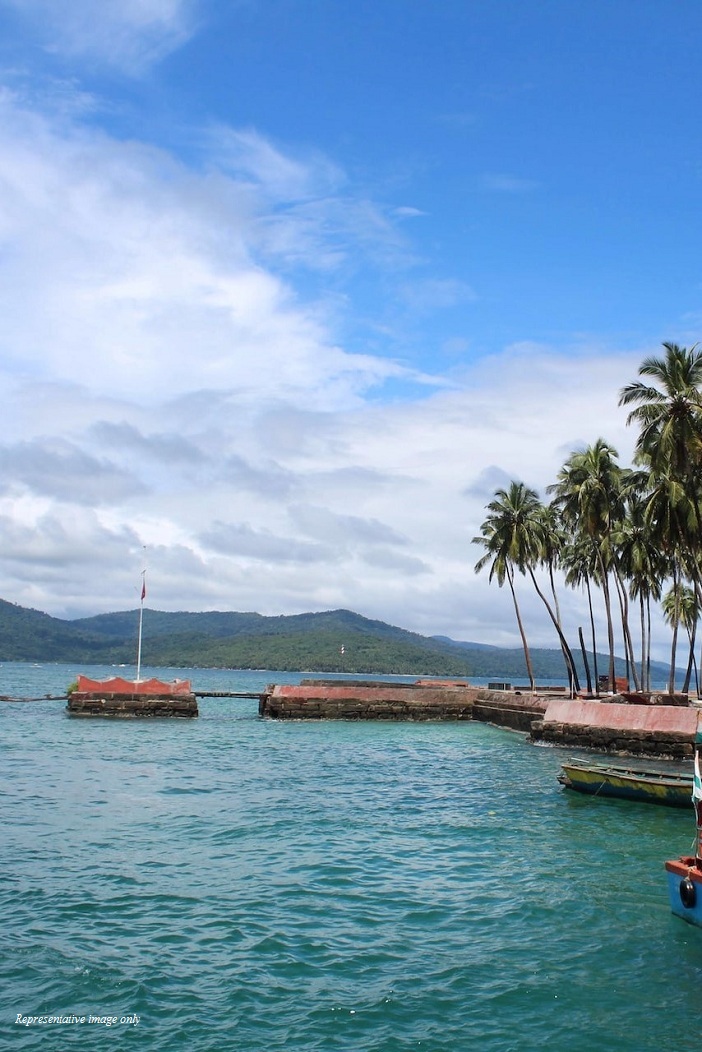
KOLKATA (West Bengal, India): The Calcutta High Court has admitted a public interest litigation challenging the Great Nicobar infrastructure project, observing that the tribal population of the Andaman and Nicobar Islands constitutes a “very vulnerable tribal group” that is not ordinarily accessible to common men.
A division bench consisting of Chief Justice Sujoy Paul and Justice Partha Sarathi Sen rejected the Centre’s objection to the maintainability of the petition and scheduled the matter for further hearing on June 23.
The petition was filed by former bureaucrat Meena Gupta, who argued that the project violated provisions of the Forest Rights Act. The Centre opposed the plea, contending that Gupta, a resident of Hyderabad, lacked locus standi to file a PIL concerning a project of national importance valued at around Rs 72,000 crore.
The Union government told the court that the project involved key strategic infrastructure, including a transshipment port, airport, power facilities and defense-related installations. It argued that the significance of the project could not be questioned through a PIL, particularly when no tribal individual had directly approached the court or authorized the petitioner to represent them.
The court, however, held that under Rule 56 of the Forest Rights Act, legal protection can be sought through a PIL if constitutional or legal rights of individuals or groups are allegedly violated. The bench noted that Gupta had long experience in matters relating to tribal welfare, forests and the environment, including her role in drafting legislation connected to the Forest Rights Act during her tenure in public service.
The Great Nicobar project has been at the center of environmental and tribal rights concerns for several years. The proposed development includes an international container transshipment terminal, an airport, a township and a power plant on Great Nicobar Island, one of India’s ecologically sensitive regions in the Indian Ocean.
Environmental activists and tribal rights groups have raised concerns about large-scale forest diversion, destruction of mangroves and coral ecosystems, and the possible impact on indigenous communities such as the Shompen tribe, classified as a Particularly Vulnerable Tribal Group. Critics have also questioned whether mandatory consent procedures under forest and tribal rights laws were properly followed before clearances were granted.
The project is defended it as strategically important because of Great Nicobar’s location near major international shipping routes.
The matter has already seen multiple legal challenges before different judicial forums. Earlier this year, the National Green Tribunal upheld the environmental clearance granted to the project, stating that adequate safeguards had been incorporated while directing authorities to ensure strict compliance with environmental conditions.
The Centre has also maintained in Parliament that no tribal communities would be displaced because of the project and that environmental protections are being implemented. However, opponents continue to argue that the scale of the proposed development could irreversibly alter the fragile ecology of the island and affect indigenous communities dependent on forest resources.
The latest proceedings before the Calcutta High Court are expected to bring renewed scrutiny to the balance between strategic infrastructure development and protection of tribal and environmental rights in the Andaman and Nicobar Islands.
Click here to follow our WhatsApp channel and get instant updates