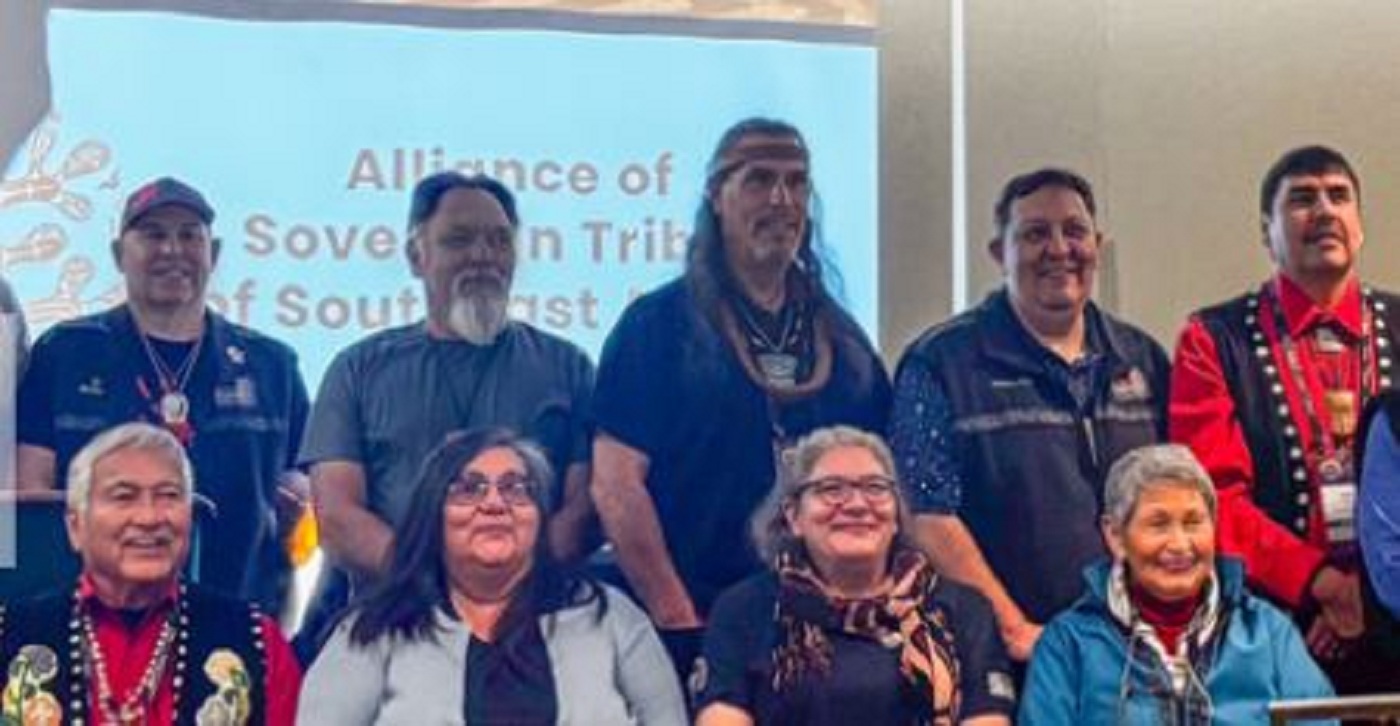
JUNEAU (United States): More than a dozen tribal governments in Southeast Alaska have forged a formal alliance aimed at strengthening regional unity, amplifying Indigenous sovereignty, and coordinating advocacy on shared issues.
The agreement, concluded at a national tribal leadership gathering in Seattle, brings together more than 11 tribes representing Tlingit, Haida, and Tsimshian peoples under a sovereign alliance. The accord commits member tribes to collaborate on culturally grounded decision-making, regular intertribal gatherings, and coordinated advocacy at local, state, and federal levels.
Tribal leaders described the alliance as a milestone in regional self-determination, designed to unify efforts on common priorities such as protection of traditional lands and waters, defense of subsistence rights, and coordinated responses to policy challenges. The framework emphasizes shared values, mutual respect, and consensus-based action as foundations for collective work.
The alliance establishes a formal structure for ongoing coordination among the member tribes. Regular meetings are planned to address regional priorities and strengthen relationships among communities that have navigated historical divisions and limited resources. Tribes agreed that periodic gatherings would focus on culturally based conflict resolution, resource stewardship, and collective advocacy strategies.
The agreement’s proponents say the alliance enhances the capacity of Southeast Alaska tribal nations to engage with governments and external institutions from a unified position. Leaders argue that collective action will strengthen their voice on issues such as natural resource management, climate adaptation, infrastructure needs, and cultural preservation.
Sovereignty and self-governance are central to the alliance’s mission. Tribal representatives noted that working together enables them to uphold inherent rights over ancestral territories and to coordinate responses to external developments that affect tribal lands and communities. The alliance framework reaffirms each tribe’s autonomous authority while providing mechanisms for joint initiatives and shared policy goals.
Observers link the formation of the alliance to longstanding efforts by Southeast Alaska tribes to assert their rights and protect ecosystems that underpin cultural and economic life-ways. Many of the tribes involved are members of the Southeast Alaska Indigenous Trans-boundary Commission, a consortium focused on stewarding waterways and landscapes that cross the US-Canada border. These efforts include legal challenges to foreign mining developments believed to impact trans-boundary rivers central to salmon, cultural practices, and food security.
Historically, Indigenous governments across Alaska have pursued collective strategies to reinforce political influence and protect traditional lands. The Alaska Native Claims Settlement Act of 1971 fundamentally reshaped land ownership and tribal economic structures in the state but did not resolve all issues related to sovereignty or resource management. In recent decades, inter-tribal organizing and coalition building have become more prominent as tribes navigate overlapping jurisdictions, environmental threats, and negotiations with state and federal agencies.
Alliance members have stressed that cultural continuity and stewardship responsibilities drive their cooperative work. Southeast Alaska’s Indigenous nations have stewarded coastal forests, rivers, and marine environments for generations, relying on subsistence fishing, hunting, and gathering practices that remain vital to community well‑being. Coordinated advocacy is seen as essential to protecting these ways of lifes in the face of development pressures and climate change.
The alliance’s structure also includes provisions for culturally based conflict resolution, reflecting the importance of traditional governance values in managing inter-tribal relationships. Leaders emphasized that honoring shared cultural heritage strengthens cooperation and enhances the alliance’s effectiveness in addressing contemporary challenges.
The launch of the alliance coincides with broader tribal leadership efforts across Alaska to build institutional capacity and enhance sovereignty. Similar initiatives include multi-tribal partnerships on environmental protection, cultural revitalization, and economic development. Southeast Alaska tribes are positioning their new alliance as a durable platform for joint action, with regular coordination expected to bolster their influence in regional policy discussions.
Tribal officials say that by working collaboratively, they can better protect their homelands, support community health and education, and ensure Indigenous priorities guide future planning. The alliance is intended to be a long-term mechanism for unity and collective strength, providing a unified voice for Southeast Alaska’s Indigenous nations in engagements with government agencies and external partners.
The formalization of the alliance marks a notable development in Alaska Native governance, reflecting a renewed emphasis on regional solidarity and shared sovereignty in the face of evolving political, environmental, and economic landscapes.
Click here to follow our WhatsApp channel and get instant updates