
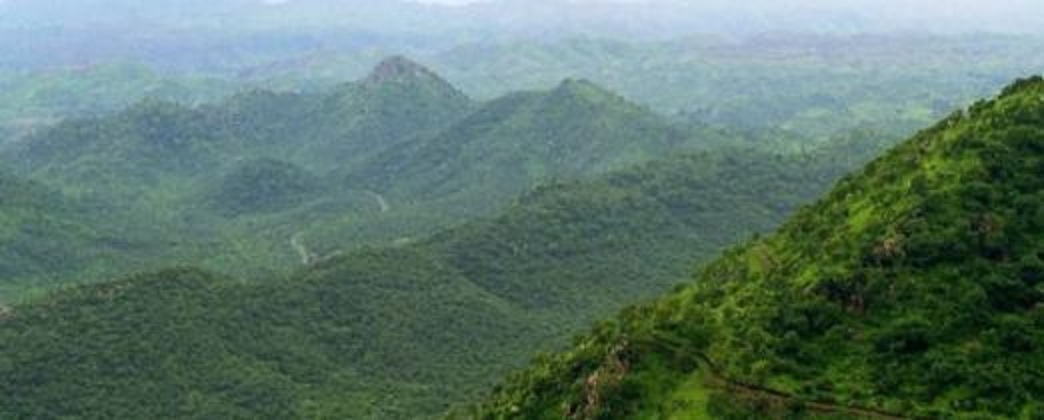
JAIPUR (India): Tribal organizations in the Indian state of Rajasthan have pledged to defend the Aravalli hills, saying the ancient mountain range is central to their identity, culture and livelihoods and warning that recent legal and administrative changes could weaken environmental protections.
Members of tribal groups from the towns of Banswara and Dungarpur held symbolic climbs and gatherings across parts of the range to protest mining and land use they say has already damaged forests, water sources and farmland. Community leaders invoked historical resistance movements and stressed the spiritual ties between indigenous communities and the hills, arguing that redefining the Aravallis in narrow technical terms would legitimize further exploitation. Environmental experts supporting the campaign said even degraded and low-lying stretches of the range play a vital role in groundwater recharge, biodiversity and climate resilience. Tribal organizations said they would continue awareness campaigns, village meetings and legal interventions to safeguard the hills and associated rights. The Aravalli range, among the oldest mountain systems in the world, runs for about 700 kilometers across India, from Gujarat through Rajasthan to Haryana and Delhi and has long faced pressure from quarrying, deforestation and urban growth, making its legal status a recurring point of contention in environmental debates.
Tribal organizations say the lack of a unified position from Aravalli states, including Rajasthan, has created uncertainty that mining and construction interests may exploit. This has prompted communities to publicly assert their stake in the hills ahead of any legal or policy outcome.
The mobilization follows renewed concern among environmental groups after the Supreme Court of India recently accepted a new uniform definition of the Aravalli hills and Aravalli range proposed by a panel of the Ministry of Environment of the Government of India. The definition established that only landforms rising at least 100 meters above the surrounding terrain, and groups of such hills within 500 meters of one another, will legally qualify as part of the Aravalli system. The court directed the government to carry out a detailed scientific mapping of the range and prepare a sustainable mining management plan, and it froze the grant of new mining leases until this process is completed. Supporters of the ruling say the height-based definition provides clear criteria to resolve long-standing disputes over Aravalli boundaries, while critics argue that excluding lower hillocks and ridges, which perform key ecological functions, could weaken protection and open previously safeguarded land to mining and development activity.
Click here to follow our WhatsApp channel and get instant updates