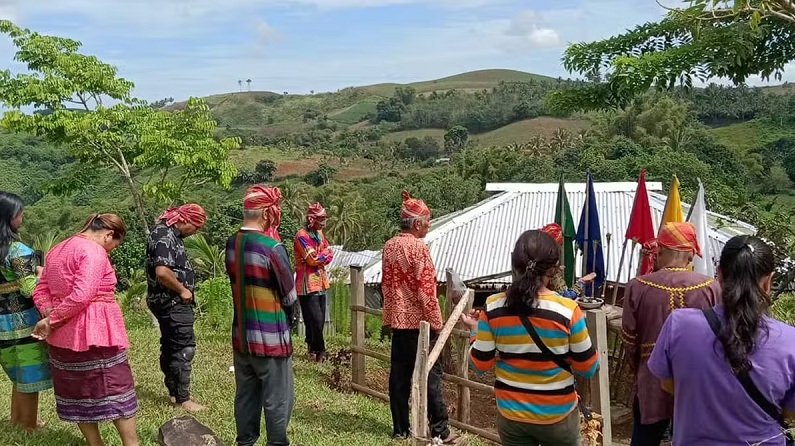
DAVAO CITY (Philippines): The Teduray-Lambangian tribe, one of the non-Moro indigenous peoples’ groups in the Bangsamoro Autonomous Region in Muslim Mindanao (BARMM), is poised to receive its Certificate of Ancestral Domain Title in June next year. The announcement comes after nearly two decades of delays and legal complications surrounding the tribe’s ancestral land claims. The Ministry of Indigenous Peoples’ Affairs and the National Commission on Indigenous Peoples assured the tribe of the release following months of intensive dialogues with the tribe, government agencies, and other stakeholders.
The tribe’s ancestral domain covers 208,258 hectares of land spanning eight towns in Maguindanao del Sur, parts of Maguindanao del Norte, six villages in Lebak town, Sultan Kudarat, and includes 14,000 hectares of water. Approximately 2,234 hectares overlap with other ancestral domain titles held by non-Moro tribes in Esperanza town, Sultan Kudarat. The Teduray-Lambangian tribe has agreed to waive claims over the overlapping areas, and community resolutions formalizing this waiver are expected to be submitted to the NCIP and the Ministry of Environment, Natural Resources and Energy by January 2026. The Menre is already in the process of segregating legal tenurial instruments within the claim area to ensure that existing land titles are accurately reflected on the map of the approved ancestral domain.
The tribe’s claim dates back several years but faced significant setbacks in 2019 when the Bangsamoro Transition Authority issued a cease-and-desist order halting the NCIP’s processing of ancestral domain claims. The BTA argued that the NCIP no longer had jurisdiction over BARMM territory. The impasse was resolved after a series of dialogues concluded in November, with the Ministry of Indigenous Peoples’ Affairs affirming that national laws, including the Indigenous Peoples’ Rights Act of 1997, continue to govern indigenous land rights in the BARMM. This decision reaffirmed that the region does not have exclusive authority over non-Moro indigenous affairs and that the NCIP retains the mandate to oversee ancestral domain claims.
The recognition of the Teduray-Lambangian ancestral domain is a significant milestone for indigenous peoples in Mindanao. Non-Moro indigenous groups have historically faced challenges in securing land rights due to overlapping claims, weak enforcement of legal protections, and the predominance of Moro-led governance structures in the BARMM. Securing the CADT not only grants legal recognition of the tribe’s ancestral lands but also strengthens their ability to manage natural resources, preserve cultural practices, and exercise self-governance.
The process for issuing the CADT requires additional steps, including the turnover of documents by the NCIP and certification of non-overlap by relevant government agencies, including the Ministry of Agriculture, Fisheries and Agrarian Reform, Menre, and the Land Registration Authority. Once completed, the title will allow the Teduray-Lambangian tribe to assert control over their ancestral lands without interference, while also contributing to broader efforts to resolve historical land disputes in Mindanao. The issuance of the CADT underscores the importance of national laws in protecting indigenous communities and provides a model for how non-Moro indigenous groups can achieve recognition within the BARMM framework.
The Indigenous Peoples’ Rights Act was enacted to protect the rights of indigenous cultural communities, ensure cultural integrity, promote self-governance, and secure human rights. The Teduray-Lambangian tribe’s impending CADT marks a rare success for non-Moro indigenous peoples in the region and represents a step toward equitable recognition of all indigenous communities in Mindanao.
Click here to follow our WhatsApp channel and get instant updates