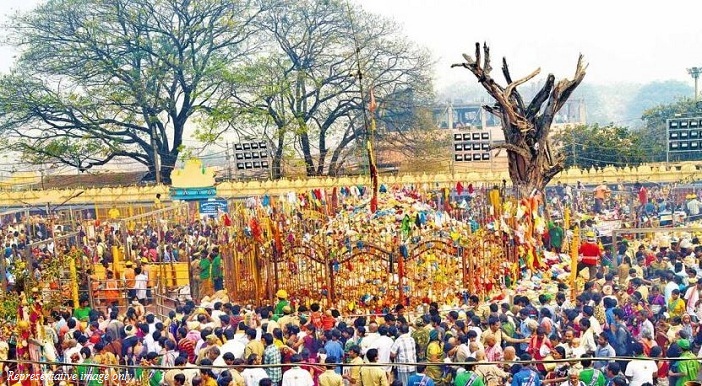
HYDERABAD (Telangana, India): The Sammakka Saralamma jatara, widely recognized as the biggest tribal festival in India and one of the largest tribal gatherings in the world, began on Wednesday in Medaram, a remote hamlet in the Tadwai forests of Mulugu district in the southern state of Telangana. Indigenous people from across India have converged at the site to pay homage to the tribal goddesses Sammakka and her daughter Saralamma, drawing what officials and local observers expect to be a record turnout of devotees over the four-day event. The festival, held once every two years, carries deep historical and cultural significance for the Koya tribal community and has grown into a major pilgrimage attracting millions of participants from several states.
The festival commenced with the ceremonial arrival of Saralamma, accompanied by deities Govindaraju and Pagididdaraju, who were brought to their sacred platforms known as gaddelu amid traditional drumming and chants. Later in the festival schedule Sammakka is expected to be brought from Chilakalagutta, followed by peak days of offerings, rituals and the concluding rite when the deities symbolically return to the forest. Pilgrims are making offerings including jaggery, coconuts and prayers at the gaddelu, and many are taking ritual baths in the nearby Jampanna Vagu stream, believed to purify and bestow blessings on the faithful.
The origins of the jatara lie in the 13th‑century legend of Sammakka and Saralamma, tribal women of the Koya community who are revered for their resistance against the Kakatiya rulers, who historically sought to impose unjust demands on tribal communities and undermine their way of life. Over the centuries the story has evolved into a powerful symbol of resilience and cultural pride among the tribal peoples of central and southern India. The festival’s name and rituals reflect this heritage, and its celebration is deeply rooted in ancient tribal customs that predate wider regional religious traditions.
In recent decades the Medaram jatara has expanded from a regional tribal gathering into a national event drawing pilgrims and visitors from neighboring states including Andhra Pradesh, Maharashtra, Chhattisgarh, Madhya Pradesh, Odisha, Bihar, Jharkhand and West Bengal. Attendance has periodically reached into the tens of millions, making it comparable in scale to major religious congregations. The Telangana government has invested significantly in infrastructure and logistics to support the event, deploying thousands of officials and staff and organizing buses, medical services, sanitation, water supply and communication networks across the expansive festival area.
State authorities have also undertaken permanent construction around the gaddelu, using granite and stonework to create enduring structures that showcase tribal traditions, history and artistry. Carvings based on ancient Koya palm leaf manuscripts depict the deities and figures from tribal lore, local wildlife, family names and cultural motifs aimed at preserving and presenting the community’s legacy for future generations. This blending of traditional ritual with modern support systems reflects both the scale of the festival and efforts to sustain tribal heritage while accommodating large pilgrim flows.
Despite its growth, the festival remains anchored in its tribal roots, with rites conducted by hereditary Koya priests and observances following centuries-old customs. The jatara serves as both a religious pilgrimage and a cultural affirmation for Indigenous communities, reinforcing ties to ancestral history and collective identity. As the four day celebration unfolds, observers note its role in preserving tribal narratives and maintaining continuity of tradition in a rapidly changing social landscape.
Click here to follow our WhatsApp channel and get instant updates