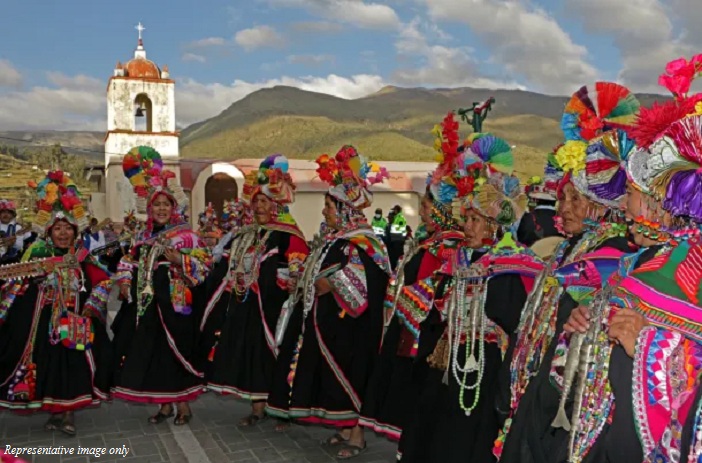
LIMA (Peru): The Sarawja Moquegua, an ancient Aymara cultural tradition from the southern highlands of Peru, has been officially included on UNESCO’s Representative List of Intangible Cultural Heritage of Humanity. The decision, announced recently, highlights the significance of the Sarawja as a vital part of the Aymara people’s cultural identity and underscores the ongoing efforts to preserve and promote Indigenous traditions globally. The Sarawja is a unique form of ritual dance that blends music, costume, and storytelling, celebrating the Aymara people’s ancestral ties to the land and their spiritual beliefs.
The Sarawja is traditionally performed during community festivals, particularly during the harvest season, to honor Pachamama, the Earth goddess, and to ensure bountiful agricultural production. The performance involves intricate footwork and symbolic movements, with dancers often adorned in vibrant, handmade clothing and accessories that reflect their cultural heritage. Music plays an essential role, with the rhythm of drums and wind instruments guiding the dancers in their ceremonial acts. The performance is not merely artistic; it serves as a powerful cultural statement, reinforcing the interconnectedness between the Aymara people and their environment.
The inclusion of Sarawja Moquegua on UNESCO’s prestigious list is a significant step in the ongoing struggle to preserve Indigenous practices that have faced centuries of marginalization. The Aymara people, who primarily reside in the Andean regions of Bolivia, Chile and Peru, have long worked to safeguard their cultural heritage amidst pressures from globalization and modernization. In recent decades, there has been a growing movement to protect and revitalize Indigenous traditions, ensuring that they are passed on to future generations.
This recognition by UNESCO also brings attention to the broader efforts to safeguard intangible cultural heritage around the world. Intangible heritage, such as rituals, languages, and performing arts, often faces challenges due to cultural erosion, displacement, and the dominance of larger, globalizing cultures. By recognizing Sarawja Moquegua, UNESCO not only highlights the beauty and richness of Aymara traditions but also draws international attention to the need for greater support for Indigenous peoples’ rights to maintain their cultural practices.
The Sarawja Moquegua is just one example of the diverse and rich cultural traditions that exist within the Aymara-speaking communities of Peru, which include the regions of Cuchumbaya, San Cristóbal, and Carumas. These areas are home to generations of Aymara families who have maintained their cultural practices despite historical challenges, including colonization and forced assimilation policies. The Sarawja, as a living tradition, continues to be a source of pride for the Aymara people, fostering a sense of community and resilience among the local population.
This UNESCO designation is expected to boost the global visibility of the Sarawja Moquegua, promoting greater appreciation for the cultural richness of the Aymara people. It is also anticipated to support local efforts to preserve and teach these traditions, ensuring that they remain vibrant and relevant in the contemporary world. As the international community continues to recognize the importance of safeguarding intangible cultural heritage, the Sarawja serves as a powerful reminder of the resilience of Indigenous cultures in the face of modern challenges.
Click here to follow our WhatsApp channel and get instant updates