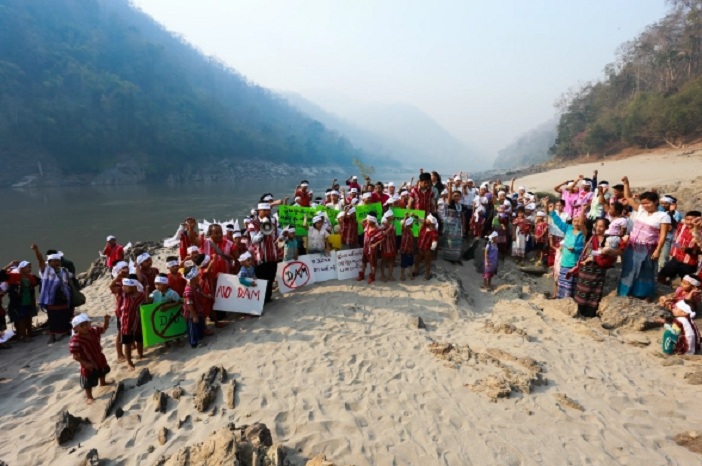
MANILA (Philippines): Indigenous peoples across Asia are reporting increasing human rights violations linked to the rapid expansion of renewable energy development, with communities in the Philippines, India, and Indonesia saying that the push for wind farms, solar parks, dams and other so-called green projects is coming at the expense of their ancestral lands and basic rights. According to Indigenous leaders and rights advocates, what is being promoted as a solution to the climate crisis is increasingly resulting in land dispossession, environmental degradation, forced displacement and rising militarization in Indigenous territories.
In Kalinga, the northern province of Philippines, the situation has become emblematic of the broader trend. Late last year, police forcibly entered the home of Indigenous rights defender Elma Awingan-Tuazon in Pinukpuk, leaving her family shaken. Awingan-Tuazon has long opposed dam and mining projects that threaten ancestral lands and livelihoods. Her experience, activists say, reflects a pattern of harassment and intimidation targeting communities resisting large-scale energy and extractive developments.
Indigenous leaders argue that many renewable energy projects proceed without genuine free, prior and informed consent from communities, a right enshrined in international standards on Indigenous self-determination. They say free, prior and informed consent must not be treated as a box-ticking exercise but as a fundamental right that allows communities to decide what projects enter their lands. Critics contend that governments and corporations are pushing these projects with limited consultation, undermining Indigenous authority over ancestral territory.
For many Indigenous groups, renewable energy infrastructure involves major alterations to the land, leading to soil erosion, land degradation and increased vulnerability to natural disasters. In the Philippines, reports say these large-scale developments have made mountains and farmlands more prone to landslides and have caused displacement as communities are compelled to give way to construction. Beyond environmental harm, activists warn that militarization often follows the entry of energy projects into Indigenous lands, with increased deployment of soldiers and security forces contributing to an atmosphere of intimidation and rights abuses.
The surge of renewable energy planning in the Cordillera region, of which Kalinga is part, illustrates the scale of the challenge. Government data shows that over one hundred renewable energy projects have been awarded in the region, the bulk of them hydropower schemes, with many still under development. Indigenous leaders express alarm at the concentration of projects within ancestral territories and the cumulative impact this has on land and communities.
This pattern is not confined to the Philippines. In India’s northeastern state of Assam, Indigenous and tribal communities successfully resisted a large solar power project that would have appropriated thousands of hectares of ancestral land without adequate consultation. Sustained protests led to the suspension of that project, highlighting the role of community resistance in challenging developments imposed without consent.
In Indonesia’s Flores Island, residents opposed a government-backed geothermal project after raising concerns about land rights, health risks and loss of livelihoods. The project was stopped after community protests, with Indigenous voices emphasizing that land and environment protection should not be sacrificed in the name of carbon reduction.
Indigenous leaders stress that they are not opposed to renewable energy itself or the urgent need to address the climate crisis. Their demand is for a just energy transition that respects Indigenous rights, ensures meaningful participation and upholds free, prior and informed consent. Without these guarantees, they warn, renewable energy expansion risks repeating longstanding patterns of land dispossession, exclusion and violation of rights faced by Indigenous peoples across Asia.
Click here to follow our WhatsApp channel and get instant updates