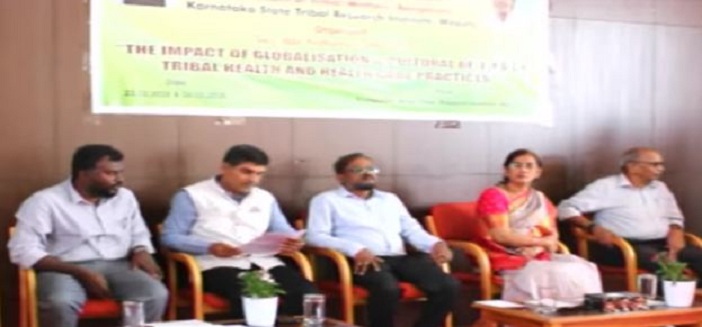
MYSURU (Karnataka, India): Experts have called for culturally sensitive policies that safeguard indigenous health traditions while expanding access for tribal people to preventive and curative health services. The call came during a two-day national workshop on impact of globalization on tribal health practices in Mysuru in Karnataka state of India earlier this month. Experts and community leaders discussed the implications of globalization and changing cultural dynamics on indigenous well being. The workshop brought tribal health and traditional healing systems into focus as long-standing concerns about the sustainability of tribal health practices and access to modern healthcare services were discussed.
Addressing the workshop, Lakshminarayana Shenoy, assistant director of the Government Ayurveda Research Center, highlighted the intrinsic connection between tribal culture and nature, describing it as fundamental to India’s heritage. He said tribal communities have sustained a symbiotic relationship with their environment for generations, relying on forests not just for livelihood but as sacred ecosystems that inform their health and spiritual practices. Tribal knowledge of medicinal plants and herbal remedies represents centuries of empirical learning that risks being sidelined in the rush toward modernization and liberalized economic systems, he said. He stressed that recognizing the value of these practices requires direct engagement with tribal forest dwellers themselves.
The workshop centered on the influence of globalization on the cultural beliefs and health outcomes of tribal communities. The participants discussed how rapid economic and social integration can disrupt traditional health systems, potentially diminishing the relevance of age-old practices rooted in local ecology.
Yogesh T, director of the Karnataka State Tribal Research Institute, addressed participants via video conference and called on tribal representatives and academics to develop actionable recommendations to improve healthcare delivery in tribal regions. He said these proposals would be presented during pre-budget consultations with state authorities to advocate for enhanced medical facilities and targeted support for tribal populations.
Over 63 research papers were presented by scholars from Andhra Pradesh, Kerala, Telangana and Delhi at the workshop. These papers explored a range of issues, including community health practices, barriers to healthcare access, and strategies to integrate traditional and modern health services.
Tribal health remains a challenge in many forested and remote areas of India, where geographical isolation and socio-economic disadvantages can limit access to quality healthcare. Initiatives such as government missions to address sickle cell disease among vulnerable communities and non-profit efforts to strengthen primary care reflect broader attempts to bridge gaps in health outcomes.
The workshop was organized by the Ministry of Tribal Affairs of the Government of India, the Department of Tribal Welfare of the Government of Karnataka, and the Karnataka State Tribal Research Institute of Mysuru.
Click here to follow our WhatsApp channel and get instant updates