
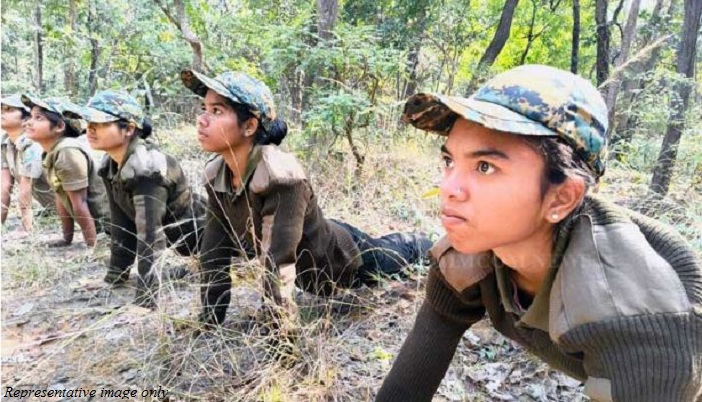
BHUBANESWAR (Odisha, India): The Indian state of Odisha has launched its first all-woman anti-poaching squad, and significantly, four of the five women in the squad hail from tribal families. These four women live in villages at the foothills of the protected forest, underscoring growing participation of indigenous women in conservation efforts.
The squad has been inducted into the regular enforcement team of the Debrigarh Wildlife Sanctuary in the state. The formation of the squad also marks a significant shift in local conservation enforcement by integrating women from neighboring communities into front-line wildlife protection. Their inclusion in enforcement roles signals recognition of their stake in safeguarding surrounding forests and wildlife resources.
These women in the squad grew up in tribal families that have traditionally depended on forest resources for their livelihoods and are familiar with the terrain and seasonal patterns of the sanctuary. Their recruitment is expected to strengthen ties between conservation authorities and local residents, many of whom have firsthand experience of the pressures between agricultural activities and wildlife habitats. Officials highlighted that the presence of women from these communities could help motivate villagers to participate more actively in conservation, shifting attitudes that have at times resulted in conflicts over land use, crop damage, and human-animal encounters.
Earlier, the squad members completed three months of intensive training that covered jungle trekking, forest patrolling, use of camera traps, mobile patrol applications, self-defense and communication tools such as VHF radios and walkie-talkies before joining about 150 enforcement personnel already deployed in the sanctuary. Two of the recruits, recognized as expert swimmers, also received specialized training for future roles in waterborne patrols and cruise operations on reservoirs within the sanctuary.
Officials say the initiative aims to enhance surveillance against poaching and other illegal activities that threaten wildlife while also promoting gender inclusion and community engagement in protecting one of the region’s key biodiversity areas. The sanctuary, under the Hirakud Wildlife Division, is home to a wide range of fauna, including deer, sambar, gaur and other species, and lies adjacent to rural communities where human-wildlife interactions are common.
The formation of the all-woman unit reflects a broader effort within Indian wildlife protection agencies to diversify enforcement roles and empower women in sectors historically dominated by men. Government and forest department officials emphasized that women bring resilience and community credibility to enforcement tasks, potentially easing tensions that arise during patrols and intelligence gathering. Tribal women, in particular, are seen as bridges between formal conservation structures and indigenous cultural knowledge of forests and wildlife.
Local tribal communities in Odisha have faced a complex relationship with protected areas for decades, balancing traditional practices with evolving conservation regulations. Sanctuaries like Debrigarh have increasingly become focal points for discussions on sustainable livelihoods, biodiversity preservation and community rights. Supporters of the initiative say it could inspire similar models in other wildlife reserves where community cooperation is critical to combating poaching and illegal exploitation of natural resources. They note that engaging tribal women, who often shoulder responsibilities for household and resource management, can contribute to more effective monitoring and reporting of illegal activities while promoting economic independence and leadership opportunities for women in rural areas.
The debut of the all-woman squad follows wider state and national dialogues about enhancing community participation in conservation, strengthening protective measures for vulnerable species, and providing alternative livelihoods to reduce pressures on forest lands. As the unit becomes operational, authorities will monitor its impact on reducing poaching incidents and improving relations between sanctuary management and the tribal populations that live in its vicinity.
The move also dovetails with plans by the state government to develop Debrigarh into a global eco-tourism destination, which officials say could further integrate conservation, local development and community stewardship of natural heritage.
Click here to follow our WhatsApp channel and get instant updates