
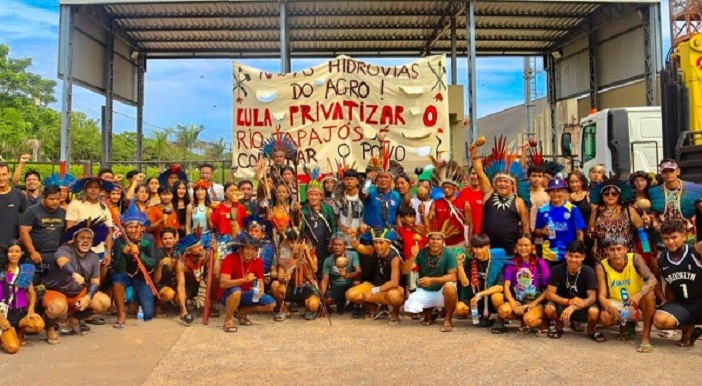
SAO PAULO (Brazil): Truck access to one of Brazil’s key agricultural export hubs has been halted by protesters in the northern state of Pará, raising concerns over supply chain disruptions in the world’s largest soy and corn export market. Since late January, demonstrators have been blocking truck traffic at the entrance to Cargill’s grain transfer facility in Santarém, a vital transshipment point on the Amazon waterway network.
Local media and reports identified the protesters as Indigenous activists aligned with the Tapajós and Arapiuns Indigenous Council, which represents a coalition of about 14 peoples whose traditional territories lie along the Tapajós River basin. The groups are opposing a government decree signed last year by President Luiz Inácio Lula da Silva that allows for private concessions to manage and dredge Brazil’s waterways, including sections of the Tapajós. They assert this jeopardizes the river’s ecology and the livelihoods of their communities. The blockade of trucks is being staged to register their protest against the decision.
Indigenous leaders say the government failed to consult affected communities, a requirement under Brazilian law and international conventions. They warn that dredging and expanded commercial traffic could accelerate deforestation, disrupt fisheries, and degrade water quality in the Amazon region, which is already under pressure from agricultural expansion.
Cargill, a major global agribusiness trader, confirmed the obstruction of truck movements at the facility but denied any occupation of its site. The company said in a statement that most bulk soybeans and corn destined for international markets arrive by river barge before being loaded onto ocean-going vessels and that only a portion of cargo is delivered by road. It said it has no control over the motivations of the protesters or the decision to block access.
The protesters have vowed to maintain their presence at the Santarém terminal until the federal government revokes or revises the contentious decree. They chose to target Cargill’s facility both for its logistical importance and its symbolic role in supporting export-oriented agribusiness, which critics link to broader patterns of environmental degradation in the Amazon.
The standoff comes amid ongoing debates over infrastructure projects aimed at enhancing export capacity from Brazil’s interior. Plans for new rail and water transport links, such as the controversial Ferrogrão railway, have drawn similar protests from Indigenous and environmental groups over fears of increased access for soy and other commodity flows into the Amazon biome.
The disruption at Santarém has practical implications for logistics in the region. The BR-163 highway, which connects the agricultural heartland in the centre-west state of Mato Grosso to the Amazon River port network, is a key artery for moving grain by truck. Blockades at the terminal entrance prevent these road deliveries from reaching river transfer points, potentially causing backlogs and delays during a crucial export period.
Brazil’s agricultural sector accounts for a substantial share of global soy and corn shipments, with logistics hubs like Santarém playing a pivotal role in moving crops from inland farms to overseas buyers.
Officials from the Lula government have engaged in dialogue with civil society groups and conducted virtual meetings to address concerns over the decree, but it remains unclear whether the administration will make any changes. Indigenous representatives have scheduled further negotiations and are insisting on direct talks to secure legal guarantees and protections for riverine territories and ecosystems.
As of now, the blockade continues to impede truck access, with farmers, transporters and export firms monitoring developments closely as pressure mounts on authorities to find a resolution.
Click here to follow our WhatsApp channel and get instant updates