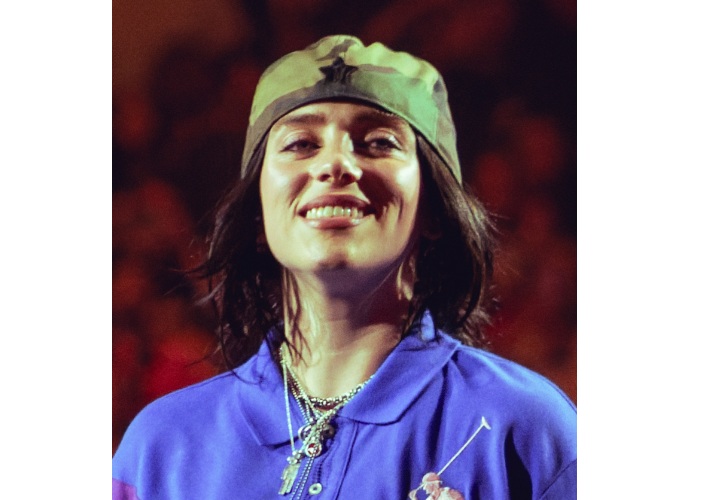
LOS ANGELES (California, United States): The remark by pop star Billie Eilish about “stolen land” has backfired.
She is facing criticism for her remark “No one is illegal on stolen land” that she made during her acceptance speech at the 68th Grammy Awards ceremony here earlier this week. She made the remark while condemning US immigration enforcement, but is now facing a backlash over the fact that her multimillion dollar mansion in Los Angeles is built on land that historically belonged to the Tongva people, the Native American tribe whose ancestral territory encompasses much of the Los Angeles Basin. The controversy has brought differing viewpoints into sharp relief, from calls for precise recognition of tribal history to accusations of “performative activism”. The controversy has triggered renewed discussion about Indigenous land rights and celebrity activism.
At the Grammys, where Eilish won Song of the Year for “Wildflower,” she delivered a politically charged message that extended beyond typical award acceptance remarks. After expressing gratitude, she pivoted to a broader social commentary, asserting “no one is illegal on stolen land” and urging continued activism. The statement, aimed at critiquing immigration policy and enforcement, drew applause from parts of the audience. However, it also quickly became a focal point for debate once commentators highlighted the juxtaposition between her remarks and her property ownership.
Critics took to social media to label her comments hypocritical, pointing to her Los Angeles home, which is reported to be worth around $3 million, as evidence of living materially on “stolen land.” This line of critique extended into political commentary, with some public figures suggesting that such land acknowledgments require concrete actions rather than mere symbolic statements.
A representative of the Tongva tribe, sometimes known as the “First Angelenos,” confirmed that Eilish’s residence sits on the tribe’s ancestral land but stopped short of making demands for its return. The statement emphasized appreciation for the visibility her comments bring to the history of Indigenous lands while urging public figures to explicitly name and acknowledge the Tongva in future discussions about ancestral territories. The tribe expressed a desire for clearer recognition of their enduring connection to the region, framing their response around education and awareness rather than confrontation.
The Tongva’s response highlights a broader context in which Indigenous nations in the United States seek greater public understanding of historical land rights and cultural heritage. The Los Angeles Basin was long inhabited by the Tongva and associated groups before European colonization and later American expansion. Today, only small portions of traditional territory are under tribal stewardship or recognition, a point that Indigenous advocates often emphasize in cultural and political dialogues.
The public reaction to Eilish’s remarks has been mixed. Some commentators and activists argue that her speech drew necessary attention to systemic issues related to immigration and historical injustices. Others say the focus on her personal property reflects misunderstanding or oversimplification of complex histories of land ownership and colonization, noting that virtually all land in the Americas has been subject to historical displacement and contested claims. The debate underscores tensions between symbolic gestures in high-profile platforms and substantive engagement with the communities whose histories are invoked.
Amid the controversy, Eilish has not issued a detailed public response regarding the criticism of her home’s location or the Tongva’s statement. The broader discussion continues to unfold across social media and cultural commentary, reflecting competing perspectives on the responsibilities of celebrities when addressing topics of historical and social significance.
Click here to follow our WhatsApp channel and get instant updates