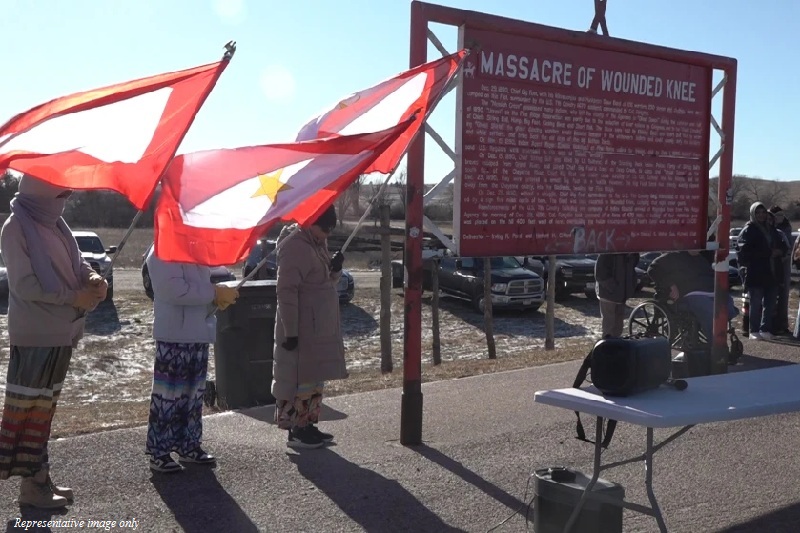
RAPID CITY (South Dakota, United States): Marking the 135th anniversary of the Wounded Knee Massacre, a series of remembrance ceremonies and programs took place today at the historic site on the Pine Ridge Reservation (about 160 kilometers from Rapid City) in South Dakota and through allied tribal and cultural organizations, bringing together tribal leaders, federal officials, descendants of survivors and community members in solemn reflection and renewed calls for education and reconciliation. The anniversary commemoration came as the recently enacted Wounded Knee Massacre Memorial and Sacred Site Act, which places 40 acres of the massacre grounds into restricted tribal ownership, was highlighted as a pivotal development in efforts to preserve and honor the memory of the victims.
This morning’s principal event, held at Wounded Knee itself, drew more than 200 persons to the site where hundreds of Lakota and Dakota men, women and children were killed by the United States Army on December 29, 1890. Tribal leaders from the Oglala Sioux Tribe and Cheyenne River Sioux Tribe presided over the ceremony, joined by South Dakota’s congressional delegation, including US senators and representatives who played key roles in securing passage of the sacred site legislation. The ceremony opened with traditional Lakota honor songs and prayers, followed by remarks emphasizing both mourning for the lives lost and the importance of protecting the land.
Representatives at the site spoke of the historical trauma carried by tribal communities and the significance of the new law that ensures federal recognition of the massacre grounds as a sacred memorial. Tribal officials presented lawmakers with star quilts in appreciation for legislative support and reiterated that the land’s designation as restricted fee status will keep it safe from commercial development and preserve it for future generations. Cheyenne River Sioux Chairman Ryman LeBeau described the anniversary as a time not only to remember but also to heal and educate, noting that today’s gathering was as much about the living legacy of Wounded Knee as about the events of 1890.
Descendants and attendees also took part in quieter acts of remembrance throughout the day. Many laid tobacco and traditional offerings at memorial markers, shared prayers with family members and paused in contemplation on the plains where the landscape remains largely unchanged since the massacre. Social posts from visitors described the powerful emotional weight of standing on the land, with some speaking of the anniversary as an opportunity to connect personally to the history and reaffirm commitments to cultural continuity.
In addition to the in-person events, Native American cultural groups and advocacy organizations hosted educational sessions and virtual programs aimed at expanding public understanding of the broader historical context of the massacre, including its roots in US government policies toward Indigenous peoples and its resonance in contemporary discussions about tribal sovereignty and historical memory. Some programs incorporated art, storytelling and discussions on how younger generations can carry forward the lessons of Wounded Knee.
Background on the massacre was woven into many of today’s observances. On December 29, 1890, tensions between the US 7th Cavalry and Lakota encamped near Wounded Knee Creek spiraled into violence, resulting in the deaths of an estimated 300 to 375 Lakota men, women and children and the loss of 25 US soldiers. The massacre is widely regarded as one of the most tragic episodes in US-Native American history and marked the end of the Indian Wars era.
Today’s anniversary programs underscored both the deep pain of that history and a cautious sense of progress with the new sacred site protections. Tribal leaders said the commemoration was a chance to honor ancestors, educate broader audiences and strengthen commitments to preserving Indigenous history and culture moving forward.
The name Wounded Knee comes from Wounded Knee Creek, the stream near where the 1890 massacre happened. According to Lakota tradition, the creek was named after an earlier incident when a Lakota warrior was injured in the knee during a fight. Over time, the area itself became known as Wounded Knee.
The name is historically and culturally significant because it is associated with the massacre of hundreds of Lakota men, women and children. It symbolizes loss, trauma, and the fight for justice and remembrance, as well as the resilience of the Lakota people. Later in the 20th century, Wounded Knee became a symbol for Native American activism, most notably during the 1973 occupation, when activists highlighted ongoing struggles for tribal rights, sovereignty, and recognition of historical injustices.
Click here to follow our WhatsApp channel and get instant updates